I have lived in the United States of America for almost half my life, immigrating here from The United Kingdom and becoming a US citizen. During my time here I have noticed a number of changes since my arrival, not least the not so gradual change from political thinking based in reason to an age of politics more based on emotional thinking.
The Age of Reason, or the Enlightenment, was a notable era in world history that heavily influenced modern philosophy and government. It was a 17th–19th century intellectual movement emphasizing reason, science, and individualism, promoting rational thought and skepticism over tradition. Its core philosophy focused on replacing superstition with science and skepticism. Its key thinkers include John Locke, Voltaire, Rousseau, Thomas Paine, and Jefferson who advocated for liberty, constitutional government, and the separation of church and state.
The Age of Reason, or Enlightenment, generally ended in the late 18th century, with most historians citing the French Revolution or the start of the Napoleonic Wars as its conclusion. The movement gave way to Romanticism, which emphasized emotion, nationalism, and individual experience over the empiricism and strict rationality of the Enlightenment.
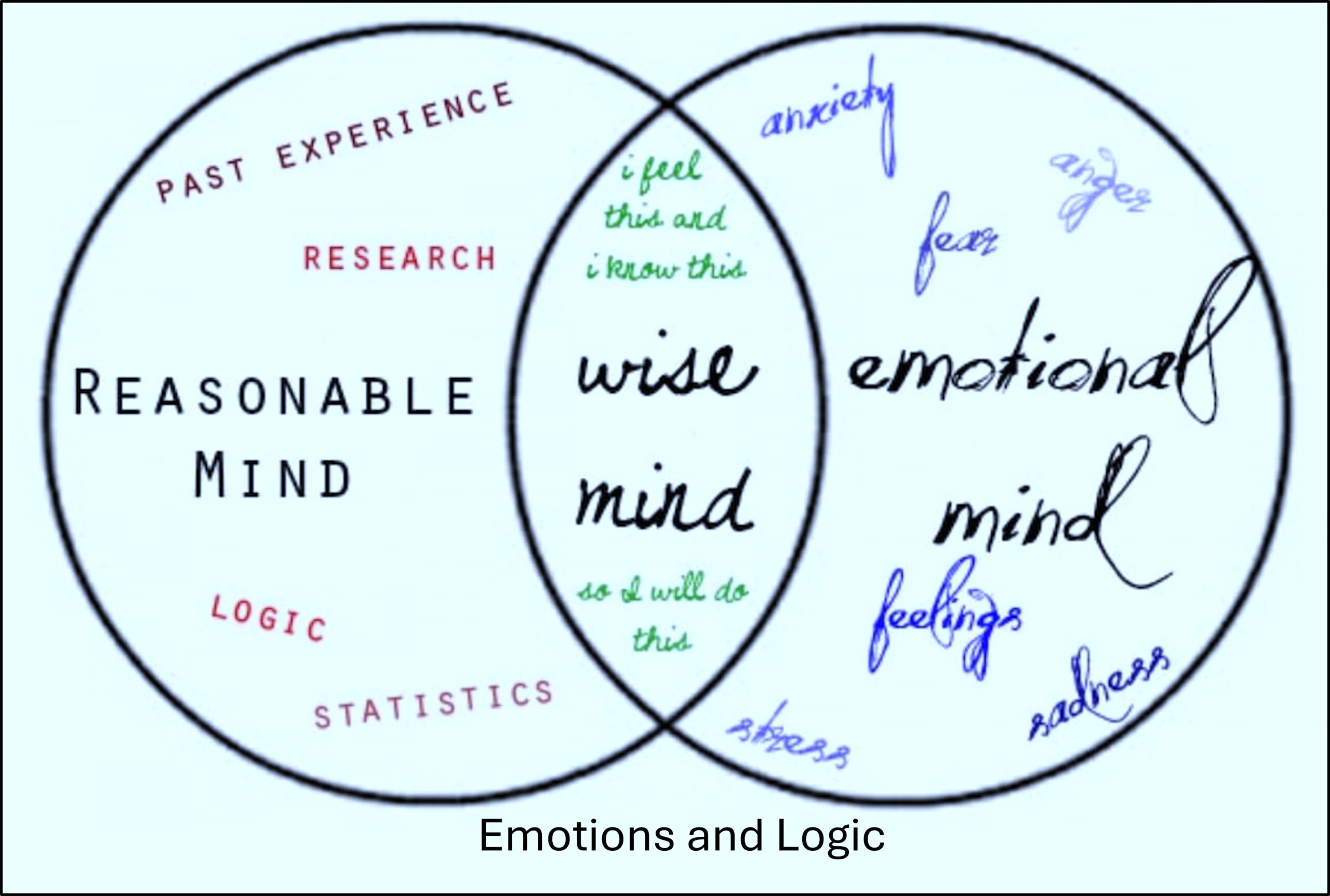
The difference between logical thinking and emotional thinking are that logical thinking is an objective, slow, and analytical process focused on facts, data, and long-term consequences, whereas emotional thinking is a subjective, rapid, and reactive process rooted in personal feelings, values, and immediate survival needs. Balancing both, often called “wise mind,” is ideal because logic offers structure while emotions provide insight into care and motivation. Sadly, I detect that this balance is rapidly fading from American politics.

Emotional thinking, or emotional reasoning, causes individuals to treat feelings as facts, leading to distorted perceptions of reality, flawed decision-making, and increased anxiety. By relying on emotions rather than objective evidence, people often experience negative thought cycles, strained relationships, and reduced workplace performance.
There are significant consequences of emotional thinking including a distorted reality where feelings are interpreted as truth; Impulsive decision making based on a temporary emotional state; a worsening of anxiety, depression and low self-worth; misinterpreting the actions of others because of personal emotional states causing conflict and resentment.
Emotional thinking in American politics, driven by anger, anxiety, and moral conviction, has created a deeply polarized environment, accelerating affective polarization where opposing sides are viewed as immoral or threats. This emotional surge increases civic engagement, such as voting and volunteering, but also fosters the spread of misinformation, the normalization of political violence, and severe declines in mental health.
Citizens increasingly view opposing parties not merely as wrong, but as immoral, unintelligent, and a direct threat to the country, leading to increased hostility. This can cause people to more likely to accept and share misinformation that aligns with their partisan identities. In addition, emotional distress, coupled with conspiratorial thinking, is linked to a higher tolerance for political violence and a willingness to reject democratic norms.
While often viewed negatively, scholars note that emotions like passion, hope, and empathy are also vital for driving political participation and democratic engagement, not just hostility. However, the current political landscape is heavily dominated by affective polarization, where the emotional distance between groups is rising
The consequence of these changes over the years is that many don’t want to be confused by facts and data that contradict their internal feelings. They are chained to their beliefs and do not wish to be deviated from them regardless of objective reality. There’s also a great amount of political lying occurring to both support and challenge those beliefs. It’s becoming more and more difficult to winnow out the objective truth from a barrage of falsehood. While I stubbornly cling to my search for empirically supported objective truth in a sea of lies, other grab the nearest ‘fact’ that fits their worldview to run with. I long for the America that was and weep for the country it has become and is becoming.
Further reading:
- Age of reason – Wikipedia
- The End of the Age of Reason? – The Globalist
- How emotions affect logical reasoning: evidence from experiments with mood-manipulated participants, spider phobics, and people with exam anxiety – PMC
- Emotional Reasoning and Psychopathology – PMC
- The Pros and Cons of Emotive Politics – Braver Angels
- Everything You Need To Know About Emotional Reasoning | REBOOT FOUNDATION


