A Brick for my Dad

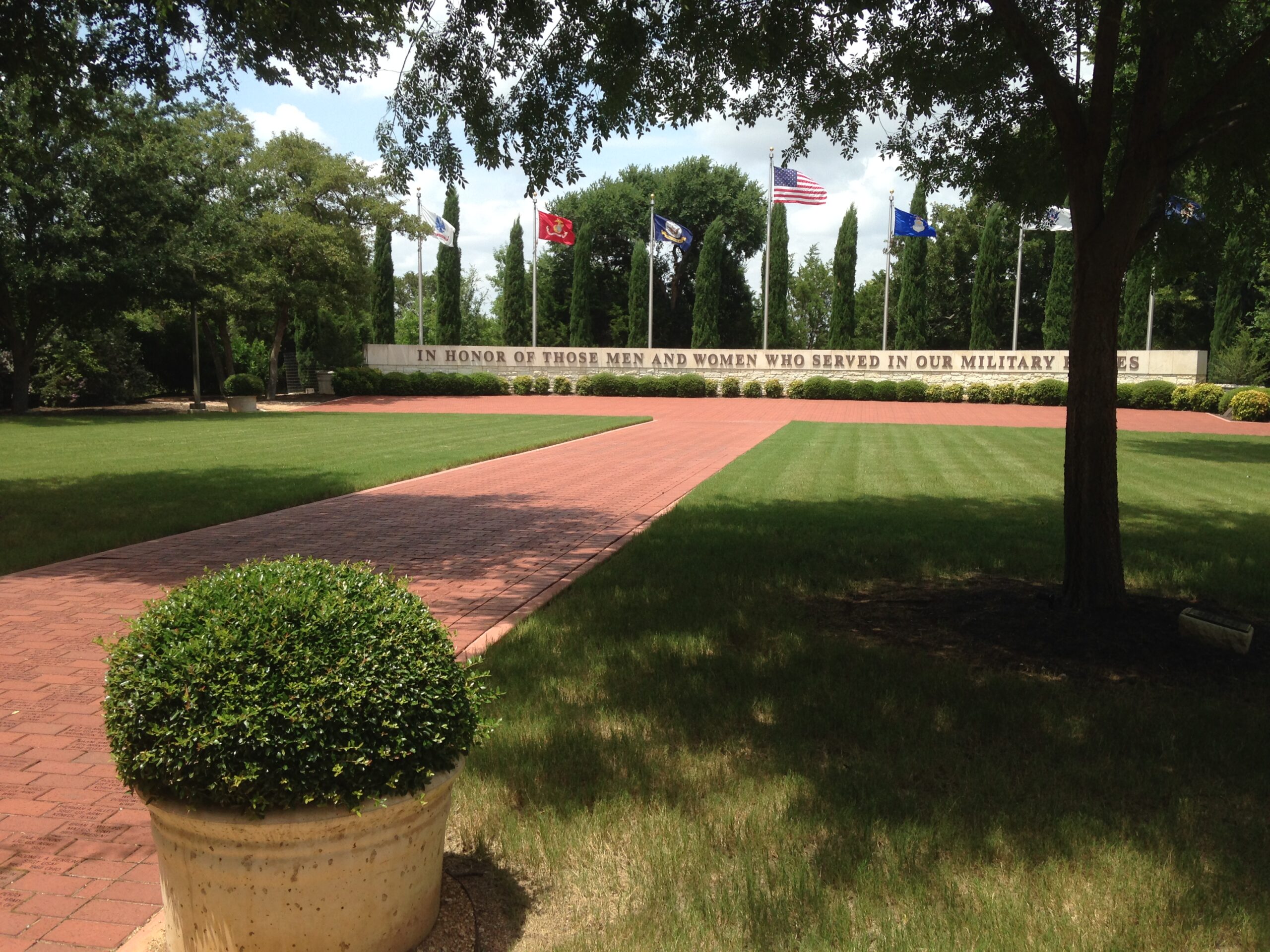
Our Veterans Memorial Garden

There are many bricks in the veteran’s memorial plaza where I live in Texas each with a different name and a different story. The brick I want to talk about looks a bit different than the rest and I hope to explain why, and why it sits with all the others.

It all started with a trip to Hawaii to celebrate our 40th anniversary. My wife and I flew to Honolulu a day early so that we could visit the USS Arizona Memorial before we headed off on a seven-day islands cruise. We got on the coach to Pearl Harbor early in the morning and were entertained by our driver with multiple tales of the islands and tourists like us. When he asked for questions one of our numbers asked him why so many Japanese visited the Arizona Memorial. I must admit to a moment of apprehension anticipating his answer but when it came it was quite unlike my unworthy expectations. He asked us all to think about how our world was changed by the Pearl Harbor attack and how the world was changed for the Japanese too. As I thought about his question I thought about my father and his circumstances on December 7th, 1941.

In December 1941 my mother and father were not yet engaged, far less married and I was not yet born. In fact, I was not even a twinkle since I was not born until 1949. On Pearl Harbor Day my father was in a German Army POW camp in Torun, Poland (Camp 17 of Stalag_XXI-A as I recall). Absent the attack his prospects of ever returning home to Scotland alive were vanishingly remote. It goes without saying that such a failure to return home would have seen my parents unmarried and me unborn, and this story unwritten.

The story of how he finished up as a POW is a tragic one, quite embarrassing to Winston Churchill’s reputation and greatly forgotten by military historians of WWII both in the USA and UK. He volunteered for the army in September 1939 the week that war was declared in the UK. He was inducted into the Seaforth Regiment and sent to Fort George, near Inverness in Scotland. After only 3 months training, he was issued a Lee Enfield bolt action rifle and 100 rounds of .303 ammunition and shipped out to France in January 1940 in the 4th Battalion Seaforth’s, part of the 51st Highland Division. The division was initially deployed as part of the British Expeditionary Force (BEF) in France near the Belgian border, then eventually stationed at the northern end of the Maginot Line near Metz, quite separate from the rest of the British Army. Those readers who are military historians will realize that the 51st HD location was a precarious one, although they didn’t know that at the time but soon would.

When the Phony War ended and the real shooting started around May 10th, 1940, the main German armored thrust landed north of the 51st HD, went through Sedan and onward to the English Channel coast near Calais, cutting the 51st off from the rest of the British Army. Elements of the 51st division did take part in supporting French armor assaults northward into the flank of the German penetration but without air support and after the German anti-tank forces worked out how to disable the heavily armored French tanks, these all failed.

The rest of the British Army was famously evacuated from the beaches of Dunkirk between May 27th and June 4th leaving the 51st HD the only British division left fighting in France (the 50th division was in the process of landing at Cherbourg but were soon turned around and sent back to the UK). The 51st, including my father, fell back along the line of the river Somme arriving near St Valery sur Somme on the English Channel coast by May 28th. They were soon engaged by strong mechanized and infantry forces. The danger of being outflanked by German armor on their right drove them slowly back toward their bases of supply at Le-Havre and Rouen. When these bases were cut off, they fell back to St Valery-en-Caux a small town on the channel coast where they attempted to hold a perimeter while awaiting to be rescued by sea.

St Valery Map

But rescue became impossible when the beaches came under direct artillery fire. They might have been saved if earlier action had been taken, but Churchill had delayed efforts to rescue the 51st and to keep them in the fight as a political bargaining tool with the French to keep them from capitulating; now it was too late.

On June 12th, 1940, the French forces supporting them surrendered and, absent food, fuel, ammunition and medical supplies, and with no embarkation possible the 51st was surrendered to the famous German general Erwin Rommel.

Gen Rommel and Gen Fortune

The 10,000 men of the division, mostly Scottish, were marched off as POWs to an uncertain future. At the time of this surrender the 51st Highland Division was surrounded by the 5th and 7th armored divisions, the 2nd motorized division, the 11th motorized brigade, the 57th, 31st, 12th, and 32nd infantry divisions of the German Army. A small force called Ark Force did escape through German lines to Le-Havre and returned to the UK, but my father was not one of the fortunate ones.

He and his buddies were stripped of all that was valuable the marched eastward toward Germany. Besides marching they were carried in coal barges, in trucks and finally by train in cattle cars to Torun, Poland which is near Gdansk, or Danzig as it was called in those days. Here they entered into the German camp system, in his case Stalag XXI-A.

Dad as POW, top row 2nd left

They were organized by service, rank and nationality. The British were treated better than most, albeit not all that well. They were issued rations of 1/5th of a loaf of black bread and a bowl of soup per day. Why 1/5th of a loaf is a mystery that only the Germans knew the answer to. At the beginning the bread was okay and the soup had recognizable vegetables and some protein in it. As time passed the ‘bread’ became sweepings and the soup became warm water.

As a private soldier my father was obliged to work in either the coal mines or on local farms. He volunteered to be a farm worker because it allowed him access to foodstuffs not available in camp that he could trade for. The POWs were sustained by Red Cross parcels, actually boxes, many supplied from the USA through Switzerland. They were supposed to receive one parcel per month but got far fewer, and sometimes none for months. The parcels contained cans of coffee, cans containing American cigarettes, cans of butter, chocolate, candies and other highly desirable products that were rarely consumed by the POWs but used as trade goods to swap for potatoes, carrots, eggs and other staples from local farmers. It was these staples that kept them alive through the next five years.

He escaped a few times; well, he walked away from the farm he was working on, but with little success. When recaptured, prisoners were yelled at, perhaps hit with a rifle butt a few times, and then they were sentenced to 21 days solitary in the camp prison, the cooler. His most successful escape attempt reached the docks at Gdansk where he and his buddy were caught climbing the dockyard fence next to a Swedish cargo ship. So, he was returned to the camp and his 21-day penance before heading out on the next work party to another farm. To my father it was all an adventure to escape the monotony of camp life. His family circumstances before he volunteered was rough, so I don’t think POW life was too unsettling for him, early on at least. He sent a postcard home to his sweetheart, my mother to be, consisting of a photograph of his hut and its residents and telling her that he was alive (I still have it). They corresponded by letter throughout his captivity maintaining their romance from afar. There is a family story that towards the end of the war, while he was again in solitary, he was informed by the guards that his older brother was in camp looking for him. Having been captured in Tobruk in North Africa and having had many adventures before pitching up in Poland his older brother, my uncle Jim got back to Scotland the same week as my dad.

In December 1941 my father had been a POW for over a year and a half. Although the Germans had attacked the Soviet Union in June that year the POWs had little hope of an end to the war in circumstances that would see them return home victorious, or indeed at all. Then Pearl Harbor happened and when Churchill was informed of the attack wrote that he “…went to bed and slept the sleep of the saved and thankful”. I suspect that the POWs had a similar reaction when they found out than America had entered the war on their side. But for this entry into the conflict, Germany would never have been defeated and my dad would never have been liberated.

Towards the end of 1944 and beginning of 1945 the camps in Poland were emptied and the POWs were rounded up and driven west to escape the advancing Soviet forces. This little-known episode is called “The March” by those who took part in it. Over a period of about four months from January to April, they were marched about back and forth across Poland and Germany for more than 500 miles in some of the most brutally cold conditions. There was very little food and those who fell out of line to raid a farmer’s field for some potatoes were often shot. Estimates vary but perhaps 80,000 allied POWs took part with between 2000 and 3000 that died on the way. One morning in late April or early May 1945 my father woke in a field near Hamburg. The guards had gone, and soon American forces arrived – he was free!

My dad returned home to Scotland and soon persuaded my mother to marry him. They settled down in central Scotland and raised two boys, my elder brother and me. Although he worked pretty much every day of his life my father’s health was affected by his time as a POW. He died young, not quite 55, and a little over a year after my mom died. She was barely in her 50’s when she died having been seriously ill since her early 30’s.

So, what has all this to do with a brick in our Veterans Memorial Garden? Well, I was telling a neighbor this tale a number of years back. He is a Vietnam veteran who was seriously wounded flying helicopters in the 1st Cavalry. He was interested in my dad’s story and my experience on the bus heading to the Arizona memorial. It was he who suggested the brick. So that is why the brick is there, not just to memorialize my father but to remind folks of what the others memorialized there have done to rescue freedom, and to place my dad’s name in a country he loved and among those who saved his life and who gave me mine.

Dad’s Brick

But for America and Americans, my dad would not have survived, and I would not have been born and would never have emigrated to the United States of America and become one of its citizens – and I would never then have placed the brick.

Further reading for the military history buff:

  1. Churchill’s Sacrifice of the Highland Division, by Saul David
  2. The St. Valery Story, by Ernest Reoch
  3. The Highland Division, by Eric Linklater
  4. St Valery, the impossible odds, edited by Bill Innes
  5. Return to St Valery, by Derek Lang
  6. https://en.wikipedia.org/wiki/Stalag_XX-A
  7. https://en.wikipedia.org/wiki/Red_Cross_parcel
  8. https://en.wikipedia.org/wiki/The_March_(1945)

You might like reading a more detailed account of my dad’s wartime experiences at my brother’s blog here.

Bladder Cancer — the unfashionable disease

One of the downsides of getting old is getting sick. I never had any serious illnesses when younger and working. After I retired things changed. Like an old car my bits started to wear out and seize up.

We had moved into a retirement community when my wife retired, but I kept working. The community we moved to is like a vacation resort for geezers with lots of activities to pursue. After about a year commuting to work and back every day while missing out on all the fun to be had at home during the day, I decided to hang up my slide rule and retire.

In retirement I played golf as many as four times a week and renewed my long-lost interest in building and flying radio-controlled aircraft, drones, and sailboats. I also took up painting, mostly wild and colorful abstract cubist paintings in acrylic, and some oil on canvas of more demure subjects. I was taking full advantage of the activities that our community offered when I was diagnosed with bladder cancer.

I won’t go into the details here of how I found out I had bladder cancer, and the story of my treatment and complications. If you are interested in the gory details, you can find them in this attached story. Suffice it to say that I had a long journey with the disease, finally having my bladder and prostate removed to be replaced by a stoma and the exterior plastic urine bag that I wear today. It’s not a great solution but it’s tolerable and allows me to wake up each morning on the green side of the grass. A negative consequence of the surgery was the loss of function of my wedding tackle, but at my age that too is tolerable.

In the midst of this journey, I had a negative finding from a colonoscopy. They found something suspicious near the junction of my transverse colon and descending colon. After checking that this condition, unlike a fine wine, would not improve with age, I agreed to having partial colorectal surgery. The surgery was performed using a DaVinci robotic surgery machine. As a confirmed technophile I insisted in being introduced to this apparatus in the operating theatre before they turned my lights out. I awoke missing a few inches of my colon and with four ‘stab’ wounds in my lower abdomen, but no stoma and no bag – whoopee!

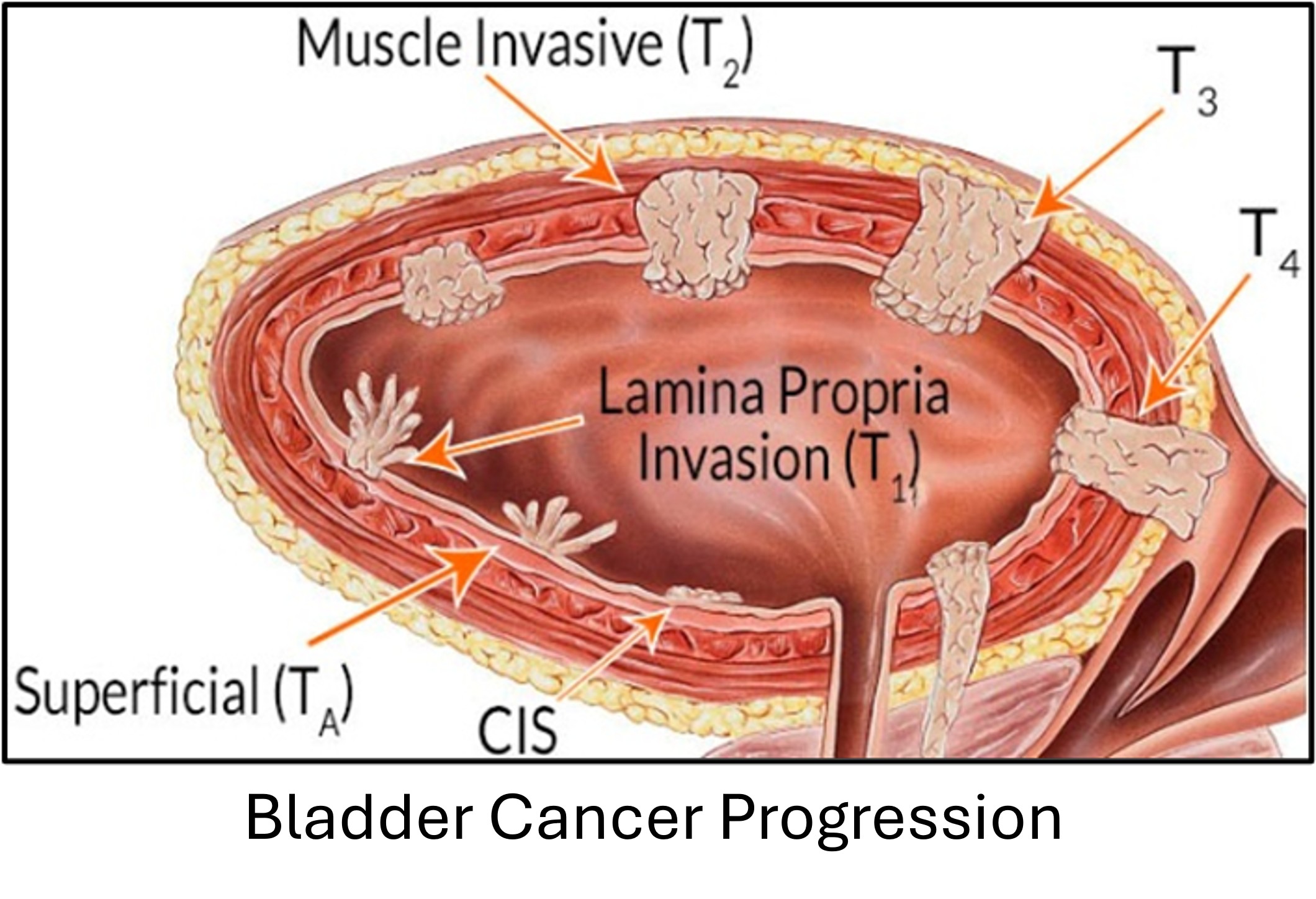
I don’t know what caused me to have the issue with my colon, but I do know what caused the bladder cancer, smoking cigarettes which I did for fifty years. Smoking causes about 90% of bladder cancers – who knew? My advice, beyond stopping, is that if you have incidence of dark pee, get tested. Bladder cancer is eminently treatable if caught early. If the cancer grows through the bladder wall into the muscle, then it becomes much more serious. To avoid colon cancer, get your regularly scheduled colonoscopies. Again, when caught early it is successfully treatable. Yes, I know the reluctance to go through the pre-colonoscopy purge process, but it’s better than a big stoma and colostomy bag, always assuming you survive that far.

So, in conclusion, the older you get, the more you need to take care of yourself. Stay fit and active and pay particular attention to your health and any symptoms of your stuff going wrong or breaking. Try to stay on the green side of the grass and have fun doing so.

What is Time?

In his book The Hitchhiker’s Guide to the Galaxy the author Douglas Adams’ character Ford Prefect states that ‘time is an illusion, lunchtime doubly so’. It turns out that Douglas Adams was more prescient than he perhaps imagined.

In contemporary quantum physics the nature of time is hotly debated and is generally unknown – an illusion perhaps. In her YouTube video Sabine Hossenfelder presents an overview of the current scientific understanding of What is Time.

It turns out that time is an enigma. We all think we know what it is, but our imaginings have no basis in science. We know that we can recall the past and only anticipate the future but beyond this our certainty evaporates.

From a scientific perspective time is imagined as a coordinate of the spacetime of General Relativity, Einstein’s theory of gravity. For macroscopic systems this kind of time may be adequate, but it seems that at the atomic scale where quantum theory applies, elementary particles operate without a knowledge of time. Indeed, they behave the same whether time runs forward or backward.

In our macroscopic world we measure time using clocks of various kinds. In this way we are made aware of the passage of time and the notion of causality where an action precedes a result. In the quantum world this relationship does not hold, we often see the consequence of an action occurring before its cause.

A scientific hero of mine, Emmy Noether discovered that the physical principle of the conservation of energy was the consequence of time reversal symmetry. She also discovered other physical conservation laws that were the consequence of other symmetries, Noether’s Theorem. This theorem is at the center of modern theories of the four forces of nature.

When it comes to clocks, we must take extreme measures to synchronize them together to establish a universal time. We are all familiar with the time zones of our daily lives, particularly when scheduling when to watch a sports event in another zone. What our human experience is mostly blind to is that clocks are subject to Einstein’s relativity, both special and general.

If we put an extremely accurate atomic clock in an aircraft and fly it at high speed, we notice that it seems to run slower than a matching atomic clock that is kept on the ground because of Special Relativity. We also note that an atomic clock that is carried into space some distance above the earth runs faster than one on the surface because of General Relativity. Both effects must be accounted for in the GPS satellites that we rely on for navigation. The system would otherwise be very inaccurate without the correction.

There does seem to be some connection between the direction of the flow of time and entropy, but entropy does not seem to be an explanation of the nature of time, especially when causality is compromised.

So far, our scientific explanations for the nature and origin of time have not yet produced a solution with wide acceptance in the scientific community. Some day we may have an answer, but it doesn’t appear that the answer will happen soon.


The UK Post Office Scandal


The UK Post Office Scandal was a massive miscarriage of justice where faulty Fujitsu’s Horizon software used by the UK Post Office falsely reported financial shortfalls occurring in sub-post offices, leading the Post Office to wrongly prosecute over 700 sub-postmasters for theft and false accounting. Many faced prison, bankruptcy, and severe distress, with 59 deaths of victims reported, at least thirteen of them suicides. So far, I’m aware of no member of the government or the software provider that has been imprisoned. This scandal has been called the UK’s most widespread miscarriage of justice.

The Post Office itself took many cases to court, prosecuting 700 people between 1999 and 2015. Another 283 cases were brought by other bodies, including the Crown Prosecution Service (CPS).

In 2017, a group of 555 sub-postmasters – led by campaigner Alan Bates, who was subsequently knighted — took legal action in a landmark court case against the Post Office. In 2019, the Post Office agreed to pay the group £58m in compensation, but much of the money went on legal fees.

However, the action paved the way for dozens of sub-postmasters to have their convictions quashed in 2021. The episode came to wider public attention at the start of 2024 when it was depicted in an ITV drama, Mr. Bates vs The Post Office.

A public inquiry into this scandal was chaired by Sir Wyn Williams. The inquiry found profound, widespread human suffering, including over 10,000 affected, ruined lives, and 13 potential suicides had been caused by the Post Office and its faulty software. As of September 2025, over £1.23 billion ($1.67 billion) in compensation has been awarded to more than 9,100 victims. The final version of the inquiry report is expected to be published in 2026.

This whole mess is a salutary lesson on the excesses of government persecution of its citizens, and the lengths people will go to CYA. The level of lying and deception presented to the statutory public inquiry is appalling, but, like always, the government covers its posterior with a straight face and a sociopathic attitude.


Malcolm Allan and MV San Delfino

Had he survived WWII Malcolm Allan would have become my uncle in-law on the marriage of my maternal uncle George to Malcolm’s sister Florence. Sadly, he did not survive the war, dying aboard the petroleum tanker San Delfino when it was torpedoed by a German submarine near Cape Hatteras in 1942.

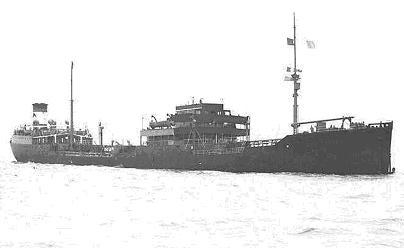
During WWII the school leaving age in Scotland was at the age of 14. As such, when Malcolm left school, he was quickly drafted, not into the armed services, but into the Merchant Marine. After his first transatlantic voyage as a cabin boy, he was so terrified by his experience that while on leave, he refused to go back to sea. The local police came to his home, arrested him and he was forced to go to sea once more, this time aboard the MV San Delfino, an 8,072-ton tanker built in the UK in 1938.

Before the war, the tanker San Delfino worked routes from Mexico, the Gulf of Mexico, and the East Coast of the United States to the United Kingdom. At the outbreak of World War II, San Delfino underwent conversions to add a 4-inch deck gun mounted at the stern and four machine guns located both fore and aft. The vessel also carried two Hotchkiss machine guns and a Lewis machine gun, making it a formidable opponent to any U-boat.

Soon after Germany declared war with the United State on December 11, 1941, the German U-boat commander, Vizeadmiral Karl Dönitz, began plans to strike a swift and devastating blow on the United States’ eastern seaboard. His plan was called Operation Paukenschlag, also known as Operation Drumbeat. In late December, five U-boats set sail, and the first torpedo strike occurred on January 11. In early April 1942, Operation Drumbeat continued with a fourth wave of U-boats, including U-203, which arrived off the East Coast shortly after a fuel stop in the Azores.

In the early morning hours of April 9, 1942, as U-203 patrolled the waters, it spotted San Delfino traveling alone from Houston, Texas to Halifax, Nova Scotia and on to the United Kingdom. U-203 fired one torpedo, striking the starboard side near the number two or number three tank, instantly igniting some of the 11,000 tons of aviation fuel carried by San Delfino. A second explosion erupted, possibly from either the ammunition cargo or the weapons on board. Flames ignited all over the vessel.

The call to abandon ship was made and two lifeboats were lowered. One of the lifeboats, however, got caught in the current and was dragged into a pool of burning fuel, horrifically killing the 24 crew members and four gunners in the boat. Malcolm was in the second lifeboat. He was only 17 when he died. The master, 19 crew members and two gunners in the other lifeboat were picked up by HMS Norwich City (FY-229) and taken to Morehead City, North Carolina. Of the 50 crew members on board, 28 lost their lives because of the attack.

MV San Delfino lies in 110 feet of water at 35°23’52.04″N, 75°6’57.92″W off Cape Hatteras on the east coast of the USA. She is now a popular dive sight, and my uncle’s grave.

San Delfino Casualties

A Life a Long Time Ago

Once upon a time I was a research physicist working for a UK defense contractor. I took up this job fresh from three years as a post-Doc research assistant in a university. I had lost my interest in pure research and realized that I was much more suited to applied physics. My specialty at that time was lasers and electro-optics, topics that were rapidly entering into the defense industry at that time.

The research department in which I worked covered a wide range of applied sciences. In my section, our work was focused on the application of laser and electro-optic technology to anti-tank and anti-air missile systems. While I worked in both of these areas, and many others, I was particularly involved with anti-air systems.

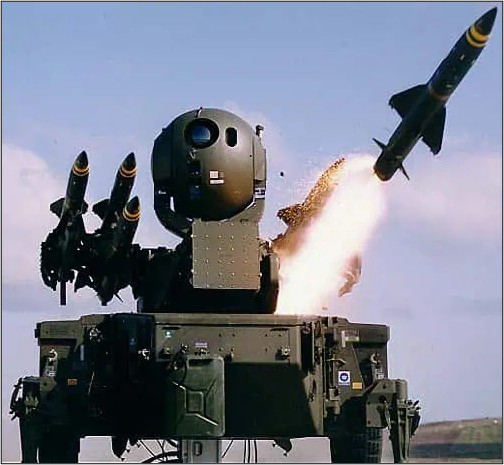
The AA missile system we were building at that time was the Rapier Field Standard B (FSB). It consisted of a launcher mounting four missiles with a surveillance radar on top. The launcher could slew the missiles around the radar to the bearing of the detected target prior to firing.

FSB Rapier

Nearby the launcher was an optical tracker system that was used to track the target and guide the missile. It required that an operator acquire the target in this sight, track it, and fire the missile that was then guided by the optical sight to impact with the aircraft. The optical tracker could be augmented with a second tracking radar system that took over the duties of the operator to guide the missile to the target.

Having watched this process in action on the firing range it was an awesome sight. The missile would leave the launcher at supersonic speed within its own length and would be out of sight before I saw it move. Fortunately, they were programmed to miss the target drones otherwise we would quickly run out of expensive aircraft.

Our job was to perform the research investigations that would support the engineering required to upgrade and modernize this system. We were to investigate the use of lasers to perform ranging and as a replacement for the guidance microwave link. Additionally, we investigated the use of lasers, and electro-optic and thermal infra-red imagers to augment, replace, and automate the existing optical tracker system.

As a small and dedicated team, we worked hard and had a blast doing this work. We had the opportunity to operate the missile simulator and to attend and participate in many trials, including live fire trials as mentioned above.

I left the company before the new systems were produced but I recognize our fingerprints on the current versions of the system. It was a long time ago, more than forty years, but I still remember those times with fondness.

RC Sailboat Tuning Stick

A while back I saw a gadget called a TrimmBlock that was used to tune the sails of an RC sailboat. Sadly, when I tried to buy one of these, they were no longer available for purchase. To me there was only one option, make one for myself using my 3D printer.

RC sailboats have lots of adjusters on them to tune the sails for maximum performance in the prevailing wind conditions. There are adjusters that set the camber at the foot of the sails, others that set the sheeted in boom angles, yet others that adjust the twist of the sails. Each of these adjustments has its own value, usually a few millimeters to a few tens of millimeters. The TrimmBlock allowed a skipper to measure and set these values easily and quickly.

When I set out to reproduce the TrimmBlock I quickly adopted a number of improvements and changes to the design. I also included a pivoting plate attached to the measuring part that had the base measurements for multiple sailboats etched into it.

The measurement plate has large notches along one edge and small notches along the other edge. The notches correspond to the millimeter measurement numbers on top. The triangles at one end indicate where the measurements relate to.

The large notches fit the jib booms whereas the small notches fit the backstay and topping lift lines. To set the camber of a sail, large notch corresponding to the required setting is placed on the boom at the 40% chord position and the reference end placed to touch the foot of the sail. The sail camber adjuster is then used to make the sail fit neatly to the reference end of the tuning stick.

The second plate is pivoted with the measuring plate and holds the settings for the cambers, boom angle, and twist of each sail. In the graphic the measurements are listed for both DF65 and DF95 sailboats. The pivoting rivet comes in two parts that are glued together to complete the assembly.

Cheap Gas and Radiation

It seems to me that the choice is a simple one; do we want cheap gas and radiation or do we not. We have survived for seventy years with the threat of nuclear Armageddon. But our adversaries were mostly sane and had similar objectives to our own. Now we face an adversary who has Armageddon as their ultimate objective, and they do not seem to be guided by the usual mores of civilized behavior that is to be found in the rest of humanity.

My father served in WWII, spending almost five years as a POW mostly in Poland. He well remembers Neville Chamberlain getting off and airliner while waving a piece of paper and declaring, ‘Peace in our time.’ That then was the poster board image of appeasement that my father and his fellow soldiers were obliged to pay for.

For almost fifty years a stream of American Presidents and diplomats have similarly alighted from airliners while declaring their version of ‘Peace in our time.’ Meanwhile Iran has used its oil income not to emancipate its people but to fund and encourage terrorist groups around the middle east and the rest of the world. Now they are close to having atomic bombs with no unwillingness to use them while we bitch about the price of gas.

The price of gas has certainly increased during the current conflict, although for most not as much as it was for Californians beforehand. The major reason that oil tankers are not transiting the Straights of Hormuz is that the owners cannot obtain voyage insurance from Lloyds of London or any other marine insurer. Once the tankers can be indemnified for their voyage the cost of gas will come down. The question for Americans to answer for themselves is what cost they are willing to endure for cheap gas. Are they willing to allow Iranian terrorists to have nuclear weapons that they may mount on their rockets to threaten their neighbors and all of Europe with. Perhaps Iranian sponsored terrorists will sail a nuke up the Mississippi in a barge to park it in St. Louis and issue blackmail demands before detonating it anyway.

It seems to me that the choice is stark, but since I’m much nearer the end of my life than to the beginning of it, I’ll let others decide how they want to live in their future since that future is likely to be much longer than mine.

AMN, 4/13/2026

Sailboat Building Tips

3D printing is a very capable method of producing custom parts for model RC boats. I use Autodesk Fusion 360 to design my parts and 3D print them using my Creality Ender Pro. I typically use Tough PLA filament for my parts. It’s easy to print and is generally tough enough for the type of sailing I do.  If you want to use a more exotic filament material that your printer doesn’t handle very well, you can get your parts printed in a choice of materials by any number of vendors on the Internet.

Here are some pictures of the type of parts I have made for my boats.

Victoria Parts

This graphic shows a Victoria servo mount with various sail servo and rudder servo combinations, a deck brace, rudder arms, and boom fittings, all of which have been 3D printed.

Victoria Gooseneck — (9mm carbon mast)

This graphic shows a gooseneck for a 9mm carbon mast for a Victoria. The gooseneck is drilled for a 4mm diameter swivel bolt, and for channels for hold down line for the main boom.


DF65 DF 95 Tuning Stick

This graphic shows a 3D printed tuning stick for DF65s and DF95 sailboats. The stick is made of two parts, one with the measurement notches, the other with the standard values for DF65 A+ rigs and DF95 A rigs. The two parts are fastened together with a plastic rivet that allows them to swivel. Other values can be written on the backs of the parts using a Sharpie.

3D Printing

I got myself a 3D printer for a Christmas gilt. Well actually, my wife bought it as a gilt but I specified the type and where to buy it from. Before you get all hissy, she specifies her jewelry gifts for me to buy for her so it is a two-way street. The printer I got is an Ender 3 Pro for the 3D printing cognoscenti. For everybody else, it’s possibly the most popular 3D printer at the moment because of its price and capability. I’m pleased with it and I have been busy making things to try it out.

Dual Extruder 3D Printer

“So what is a 3D printer and why did I want one?” I hear some of you say, well it’s a device that produces 3D objects from a computer modeling program. For most hobby-grade 3D printers it does this by melting plastic string to make the object. The plastic string comes as a reel that is mounted to the printing machine. The string, or filament as it’s properly called, is fed into heated nozzle where it is transformed into a molten thread. This thread is then placed onto the surface of a platform or platen that is moved from front to back by the computer. The nozzle is mounted so that it can be moved from side to side and up or down, also under computer control. By drawing a two-dimensional slice of the object being built onto the platen, then lifting the nozzle up a little bit before drawing the next slice on top of the first, the 3D object can be made, slice by slice.

These printers are used by hobbyists for fun projects. I wanted one to make parts for my model planes and model boats. Simple parts that cost a lot to buy and are hard to find. 3D printers are also used professionally to produce prototypes of new products for consumer testing or complex parts for high technology industries. More complex 3D printers are used to produce prosthetic limbs and other complex structures.

3D-printed Brake Caliper

3D-printed Prosthetic Limb

Specialized printers produce sintered metal objects such as jet engine compressor blades. SpaceX makes parts for their rocket motors using a metal deposition 3D printer. Other printers use a bath of metal powder and a laser to produce the 3D print. Yet others use a bath of liquid monomer chemical and a laser that draws on the surface generating a polymer trace to make the 3D object. The applications continue to grow as more and better 3D printers are developed.

The mention of laser 3D printers reminds me of a time long ago and far, far away when I was working as a postdoc researcher in the chemistry department of a large university in England. We were studying the chemical applications of laser technology. We did in fact produce the first laser induced chemical reaction

3D-printer Compressor Blades

and the first laser induced reversible isomerization. In our department at that time we had a guest member of staff who was given facilities for his research but was not paid a salary. He earned his living by scientific writing, particularly in writing a weekly column for the UK’s most prestigious popular scientific magazine.

Laser-powered 3D Printer

We would often meet over coffee where he would present us with his latest crazy idea for a column. These columns were very amusing and intellectually challenging since they would always have within them a technical flaw that made their claims specious. On one occasion he asked about the possibility of filling an aquarium tank with a monomer that required two different laser colors simultaneously to produce polymer. If we could organize things such that the two different lasers were made to cross inside the tank, they would produce a blob of hardened plastic polymer. By scanning the lasers about we could make a three dimensional object; an early generation 3D printer before they had been invented; we thought. This ‘invention’ was only for the amusement of his readers but when he published the idea little did he anticipate the reaction. He and his publisher were served with a writ to cease and desist by a company claiming contravention of their patent. This writ came from some company in the USA who didn’t seem to have much of a sense of humor and were unable to detect the spoof that it was.

SpaceX Draco Rocket Motor with 3D Printed Parts

My current interest in 3D printing is focused on my RC sailboat hobby; I want to make a 3D printed model sailboat. I know that others have done this but I’m not interested in copying them so much as learning from their experience to build my own model. Since my printer doesn’t have a print volume large enough to accommodate a complete model, I will have to build it in sections then glue them together, much like most large ships are made today.

To do the design work I use Autodesk Fusion 360 as my CAD program. This is available for free for non-commercial hobbyist use. When I have an object that I want to print I save it as a STL file then I use Ultimaker Cura to slice it. The Cura slicing program does basically what it says; it makes the 2D slices from the 3D model that are then stacked on the printer to produce the 3D object. Once I have the GCODE file made by the slicer, I load it into the printer, load up the printer with the chosen filament, warm it up and set it going. Prints can take a long time. An object about 1cm by 1cm by 1cm will take a bit less than an hour to print but larger objects can take all day.

Luckily I have two sailing buddies who have printers and they have given me lots of tips on how to get the best results. They also made some parts that I wanted before I got my own printer. The most notable of these parts was the mold for a ballast bulb that one of my friends made for me for my US 1M build.

Ballast Bulb Design for my RC Sailboat

He took the airfoil shape that we wanted and modeled it using Fusion 360. The CAD software gave an estimate of the volume of the torpedo shape and we combined that with our best estimate of the density of the material we would use until we got close to the 4lbs weight I was looking for. He then printed out the half mold in two sections on his printer. I glued the two parts together to get a mold of the lower (or upper) half of the bulb shape. This I filled with epoxy resin and #7 lead shot. When it set, I removed the shape, made a second piece and epoxied the two together. A little filling and filing, a couple of coats of primer, a coat of black paint and some clear lacquer, and I had a perfect bulb weight for the keel of the boat.

As I said earlier, I’m having fun with my printer. If you want to know more just Google 3D printing and you will get a huge list of information about them including places that will make a 3D print for you as a service, albeit not a cheap one.