When I was in high school gravity was simple, when I got to university it got complicated, but I still don’t know how gravity sucks.
In high school we were taught Newton’s gravity. Newton explained gravity as a force of attraction between two bodies that had mass. This force was proportional to the product of the masses (their values multiplied together) and divided by the distance between them squared. I was happy with that explanation, and it was perfectly adequate to get us to the moon and back. I did have a reservation that the masses used for gravity were the same as the masses used in Newton’s laws of motion. Much later I found out that this question is called the Principle of Equivalence and has perplexed much smarter people than me.
Newton’s Gravity
Just to make this post more scientific let my present Newton’s equation of gravity:
Newton’s Gravity Equation
where G is the universal gravitational constant, m1 and m2 are the masses and r the distance between them
That doesn’t look too hard to understand or use but it does pose several philosophical questions, particularly the one I started with, what sucks?
Despite some reservations Newton’s law of gravity works for most things, like predicting the orbits of planets to predicting the trajectories of rockets and inter-planetary satellites. That being the case why do we need an alternative, improved version?
It turns out that Newton’s gravity may provide computational accuracy for most gravity questions, it fails to answer some deep philosophical questions. These questions include answering how gravity provides action at a distance. How do the two masses know about each other’s size and how far apart they are? How fast is the force? Is it instant or limited in speed?
When Einstein published his theory of Special Relativity the speed of gravity was settled at the speed of universal causality, the same as the speed of light. The question remained on what was swapped between the masses that transmitted the gravitational force, and the Equivalence Principle remained an open question.
Then Einstein presented his theory of General Relativity to the world, and everything changed. Not only did this theory predict and explain the precession of the orbit of Mercury around the sun, a topic that was not in the forefront of thought of the general public at that time and isn’t today, and a behavior that was not explained by Newton’s gravity. It also explained gravity’s action at a distance and the Equivalence Principle.
Einstein’s Gravity
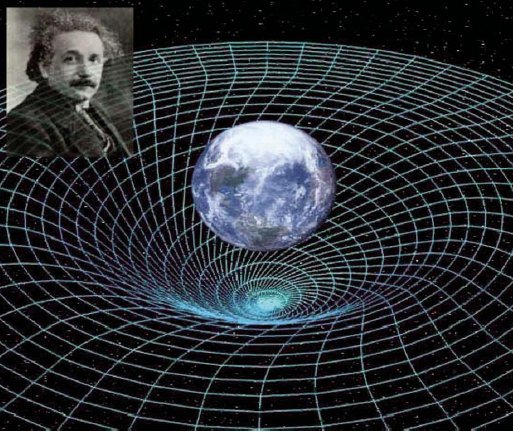
General Relativity claims that mass curves spacetime and spacetime guides mass. In simple terms, it is mass that tells spacetime how to curve, and it is spacetime that tells mass how to move. These claims are wrapped up in Einstein’s equation of General Relativity shown below:
Einsteins Gravity Equation
Where:
This is a tensor equation and is obviously much more complicated that Newton’s equation, which perhaps explains why we use Newton’s equation if we can.
However, here’s where I get to my pet peeve. Einstein’s Equation for gravity says that mass (or energy) bends spacetime and that bent spacetime directs the mass/energy how to move, but what are they saying to each other? How are mass and spacetime communicating with each other? What is it that mass communicates to spacetime to persuade it to bend, and what power does spacetime have to make mass follow it’s suggested direction? In a nutshell, how does gravity suck?
Smarter people than me state that mass/energy IS spacetime, but that is beyond my ability to understand. I need a simpler explanation than that. I suppose I’ll just keep wondering how mass/energy sucks on spacetime to make it bend and how spacetime sucks on mass/energy to direct its motion. I guess I’m either dense or stubborn, or perhaps both.
In his book The Hitchhiker’s Guide to the Galaxy the author Douglas Adams’ character Ford Prefect states that ‘time is an illusion, lunchtime doubly so’. It turns out that Douglas Adams was more prescient than he perhaps imagined.
In contemporary quantum physics the nature of time is hotly debated and is generally unknown – an illusion perhaps. In her YouTube video Sabine Hossenfelder presents an overview of the current scientific understanding of What is Time.
It turns out that time is an enigma. We all think we know what it is, but our imaginings have no basis in science. We know that we can recall the past and only anticipate the future but beyond this our certainty evaporates.
From a scientific perspective time is imagined as a coordinate of the spacetime of General Relativity, Einstein’s theory of gravity. For macroscopic systems this kind of time may be adequate, but it seems that at the atomic scale where quantum theory applies, elementary particles operate without a knowledge of time. Indeed, they behave the same whether time runs forward or backward.
In our macroscopic world we measure time using clocks of various kinds. In this way we are made aware of the passage of time and the notion of causality where an action precedes a result. In the quantum world this relationship does not hold, we often see the consequence of an action occurring before its cause.
A scientific hero of mine, Emmy Noether discovered that the physical principle of the conservation of energy was the consequence of time reversal symmetry. She also discovered other physical conservation laws that were the consequence of other symmetries, Noether’s Theorem. This theorem is at the center of modern theories of the four forces of nature.
When it comes to clocks, we must take extreme measures to synchronize them together to establish a universal time. We are all familiar with the time zones of our daily lives, particularly when scheduling when to watch a sports event in another zone. What our human experience is mostly blind to is that clocks are subject to Einstein’s relativity, both special and general.
If we put an extremely accurate atomic clock in an aircraft and fly it at high speed, we notice that it seems to run slower than a matching atomic clock that is kept on the ground because of Special Relativity. We also note that an atomic clock that is carried into space some distance above the earth runs faster than one on the surface because of General Relativity. Both effects must be accounted for in the GPS satellites that we rely on for navigation. The system would otherwise be very inaccurate without the correction.
There does seem to be some connection between the direction of the flow of time and entropy, but entropy does not seem to be an explanation of the nature of time, especially when causality is compromised.
So far, our scientific explanations for the nature and origin of time have not yet produced a solution with wide acceptance in the scientific community. Some day we may have an answer, but it doesn’t appear that the answer will happen soon.
Once upon a time I was a research physicist working for a UK defense contractor. I took up this job fresh from three years as a post-Doc research assistant in a university. I had lost my interest in pure research and realized that I was much more suited to applied physics. My specialty at that time was lasers and electro-optics, topics that were rapidly entering into the defense industry at that time.
The research department in which I worked covered a wide range of applied sciences. In my section, our work was focused on the application of laser and electro-optic technology to anti-tank and anti-air missile systems. While I worked in both of these areas, and many others, I was particularly involved with anti-air systems.
The AA missile system we were building at that time was the Rapier Field Standard B (FSB). It consisted of a launcher mounting four missiles with a surveillance radar on top. The launcher could slew the missiles around the radar to the bearing of the detected target prior to firing.
FSB Rapier
Nearby the launcher was an optical tracker system that was used to track the target and guide the missile. It required that an operator acquire the target in this sight, track it, and fire the missile that was then guided by the optical sight to impact with the aircraft. The optical tracker could be augmented with a second tracking radar system that took over the duties of the operator to guide the missile to the target.
Having watched this process in action on the firing range it was an awesome sight. The missile would leave the launcher at supersonic speed within its own length and would be out of sight before I saw it move. Fortunately, they were programmed to miss the target drones otherwise we would quickly run out of expensive aircraft.
Our job was to perform the research investigations that would support the engineering required to upgrade and modernize this system. We were to investigate the use of lasers to perform ranging and as a replacement for the guidance microwave link. Additionally, we investigated the use of lasers, and electro-optic and thermal infra-red imagers to augment, replace, and automate the existing optical tracker system.
As a small and dedicated team, we worked hard and had a blast doing this work. We had the opportunity to operate the missile simulator and to attend and participate in many trials, including live fire trials as mentioned above.
I left the company before the new systems were produced but I recognize our fingerprints on the current versions of the system. It was a long time ago, more than forty years, but I still remember those times with fondness.
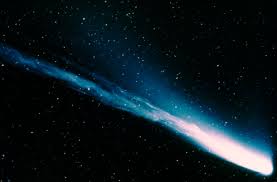
When I was a kid living in Scotland, I remember my dad getting us out of bed in the middle of the night to show us a comet in the sky out of our bedroom window. This occurred in the 1950s. The comet was easily visible with the naked eye and had a very distinctive tail. I don’t know for sure which comet it was but a little research suggests it was either Arend-Roland or Mrkos. My money is on Mrkos.
Comets Arend-Roland (left) and Mrkos (right)
Both these comets were visible from Earth months apart in 1957 and both were non-periodic comets; so they won’t be back. I have never seen another comet so clearly since then.
There’s a lot of fuss today about comets and asteroids and their possibility of impacting our planet. It turns out that we are struck by at least 6000 asteroids per year, most of which are small and burn up in the atmosphere. It’s estimated that about 100 tons of dust/sand-sized debris impact our atmosphere every day.
Armageddon?
It seems that asteroid impacts are quite common so I think the fuss is really about those that are large enough to cause a threat to life and property. Asteroid impacts of this size are rare. Impacts that are large enough to cause damage and some loss of life happen about every 2000 years on average with those large enough to threaten our civilization occurring every few million years.
Most asteroids orbit the sun in a belt, the Asteroid Belt, between Mars and Jupiter. This belt lies in the plane of the ecliptic, the disk around the sun within which all the planets orbit. Now and again one of these asteroids is disturbed in its orbit, usually by a collision with another asteroid, and fall inward toward the sun in the plane of the ecliptic.
Asteroid Belt
As it falls toward the sun it gains speed, swapping its potential energy for kinetic energy. When it gets close to the Earth it can be moving at up to 150,000 miles per hour. The law of gravity means that the speed of the falling asteroid does not depend on its mass, but its kinetic energy does. A large mile wide asteroid weighing millions of tons and traveling at 150,000 miles an hour will be an extinction-level event if it hits our planet; the planet will recover, we will not.
Comets are thought to come from either the Kuiper Belt, a disk-shaped cloud of objects and lies beyond the orbit of Neptune, or the Oort Cloud that is thought to be a spherical cloud far beyond Pluto that contains up to a trillion comet-like objects. Unlike asteroids, comets typically travel toward the sun on a path that is not in the plane of the ecliptic.
Kuiper Belt and Oort Cloud
These more random trajectories and the relative infrequency of comets compared to asteroids makes them less of a threat. Although it might have been a comet that caused the impact 65 million years ago that is attributed to the extinction of the dinosaurs, it was more likely to have been an asteroid, if for no other reason than the abundance of Iridium that it seems to have left behind.
I do hear people worrying about the destruction of the planet; they should not fret about the Earth being destroyed. Our planet has survived many extinction events and come through it, changed to be sure, but still a vibrant home to new life forms to thrive. The human species may be exterminated by a comet or asteroid impact, but the planet will continue to spin on its axis and orbit the sun as before, it will just do so less a number of the species currently living upon it. When folks claim to be trying to ‘save the planet’ they aren’t, they are trying to save themselves in the manner that they find comfortable. I don’t hear them consulting cockroaches and ants for their opinion on planet-saving.
Our planet is about 4.5 billion years old. During that time it has gone through many changes. The late heavy bombardment is thought to have happened about 4 billion years ago and is thought to have been a time when Earth was hammered by a deluge of asteroids leaving the surface molten lava. Life would not have been possible during this time. As the Earth cooled the early atmosphere consisted mostly of nitrogen and carbon dioxide, 200 times what is in the atmosphere today, with an abundance of methane, ammonia, water vapor, hydrogen sulfide, and neon, but no oxygen. The oxygen-rich atmosphere occurred about 3 billion years ago and was caused by the emissions of oxygen by cyanobacteria, using photosynthesis, that thrived in the CO2 rich atmosphere. This was chemical warfare on the global scale as the planet was changed forever. The arrival of free oxygen kick-started the evolution of life on Earth. But it would not last as life on Earth endured a sequence of mass-extinctions beginning with the Ordovician-Silurian Extinction some 440 million years ago.
Life has thrived then been extinguished at least five times in the history of our planet. It seems that more than 99% of all species that ever lived on Earth are now extinct. The first mass extinction, the Ordovician-Silurian Extinction, occurred about 440 million years ago and killed off about 85% of all species, mostly small marine organisms. It is thought that the cause was the rapid swing of the global temperature from very much colder to a very much warmer bounce, with changes in sea levels and atmospheric CO2 concentration. It doesn’t seem that comet or asteroid impacts were responsible.
Life thrived again on Earth until the next mass extinction killed 75% of all species, falling hardest of marine organisms including corals and trilobites. This Late Devonian Extinction happened over a 20 million year span starting about 380 million years ago. It is thought that this extinction was caused by mass volcanism, probably in what is now Siberia, that resulted in lower oxygen levels in the atmosphere.
Volcano
The Permian-Triassic Extinction, 252 million years ago, is also called the Great Dying. It killed off 96% of all marine species and 75% of all land species. The world’s forests were wiped out as well as large numbers of insect species. The largest contributor to this global calamity was the Siberian Traps, a complex of super volcanos that spewed 14.5 trillion tons of carbon into the atmosphere. The global temperature rose about 30F with the result that the oceans lost up to three-quarters of their oxygen.
Life on Earth got busy recovering from the Great Dying but only 50 million years later, about 201 million years ago, some 80% of all species were wiped out in the Triassic-Jurassic Extinction. The causes of this extinction event are the subject of much debate. Some contend that the cause was global warming caused by the release of CO2 into the atmosphere by volcanism associated with the break up of the super-continent Pangea. Others blame the release of methane into the atmosphere while a third group of scientists blames a combination of volcanism and the impact of a large comet or asteroid. What is not debated is that this extinction event cleared the way for the dinosaurs to rule the Earth.
Dinosaur
The dinosaurs prospered for 150 million years until they were wiped out along with 76% of all species by the Cretaceous-Tertiary Extinction 65 million years ago. The causes of this extinction have been long debated but the majority view nowadays is that it was caused by a large asteroid impact off the coast of the Yucatan Peninsula. The jury is still out on the verdict on the cause with a vocal minority blaming global warming caused by volcanism and other tectonic effects. What is not in doubt is that land dinosaurs were profligate before this event and non-existent afterward, leaving the planet free for the rise of the Mammals, including us.
What can we conclude from this history of the evolution of life on our planet and the mass extinctions that eliminated most of the life at five times in our history? I think that the first obvious conclusion is that our planet is very robust and can shake off these calamitous events as can be seen by the average global temperature over the last 500 million years.
Global Temperature Last 500 Million Years
Life too seems to be very robust in the abstract if not the specific.After each annihilation of species, new life evolves and thrives on our planet. It seems therefore that while the life of humanity may be fragile and in danger of extinction from one calamity or another, life on planet Earth is not subject to the same danger. When we are gone, our planet will keep spinning and orbiting the sun and new life will keep evolving until our sun goes red giant and consumes it. I will not be here to see that event but I wish I could.
Many people are curious about the universe they live in. Many of them are afraid to ask obvious questions in case they are accused of asking stupid questions. When it comes to matters of science there are no stupid questions; it’s the simple questions that reveal the most interesting findings. Here I want to pose some of the most obvious questions that people might ask. These questions, it turns out, are not simple but reveal some of the deepest and most complex properties of our universe. Here I am reviewing some of the questions that people ask together with my understanding of how science answers them. Remember that I could be wrong in my explanations but I think I’m mostly right.
One of the first questions people ask is ‘how old is the universe?’ This is a very non-stupid question. Scientists and philosophers have been staring at the night sky for centuries and more, contemplating this very question. Now we have an answer that has been a long time coming. As best we can tell our universe is about 13.8 billion years old.
Your next question should be, ‘how do you know that?’ That too is not a stupid question. Our first clue came from the work of the famous American astronomer, Edwin Hubble and the Belgian astronomer Georges Lemaitre. Hubble found that distant galaxies were moving away from each other at a speed that increased with distance, Hubble’s Law. That being the case, turning the clock backward would find all of the galaxies in one place at one time. This finding was initially greatly resisted by other astronomers who insisted that the universe was static and infinite in time and space. It was one of them, Fred Hoyle, who coined the phrase Big Bang as a derogatory epithet. The phrase stuck as did the expansion theory with its conclusion of a finite age to the universe.
Modern estimates of the age of the universe depend less on Hubble’s Law and more on the precise measurement of the Cosmic Background Radiation (CMB).
Cosmic Microwave Background
As the universe expanded after the Big Bang, the universe cooled from the almost unimaginable temperatures that it started with. That cooling continues to this day. By measuring the temperature of the CMB today we can estimate for how long the initial fireball has been cooling, leading to the most accurate estimate of the age of the universe of 13.8 billion years.
The next question people might ask is, ‘how big is the universe?’ That too is not a stupid question and it has multiple answers. We can see up to 13.8 billion years away, almost back to the beginning of the universe, but it has expanded since then. Because of this expansion, what was 13.8 billion light-years away is now estimated to be 46 billion light-years away. Thus the diameter of the observable universe is estimated to be 93 billion light-years and still expanding.
There is no sure answer to the question, ‘what existed before the Big Bang?’ There have been many attempts to answer this question with no completely convincing theory. These attempts continue today with some claims that the CMB shows signs of ‘bruising’ caused by contact with an adjacent universe together with other indications of a life before the Big Bang. Steven Hawking and James Hartle suggested in a famous scientific paper that the evolution of the universe was shaped like a shuttlecock, with no beginning. They claimed that asking what came before the Big Bang was like asking what was south of the South Pole.
Shuttlecock Universe
This answer is very unsatisfactory since it avoids an answer. This drives scientists to strive even harder to find a theory that explains the facts and is satisfying.
Perhaps the next question people ask is, ‘what will happen to the universe over time?’ Again there is no clear answer, it all depends on the nature of space and time. We once thought that the future of the universe depended on how much matter (stuff) was in it. It’s a bit like throwing a baseball straight up into the air. Since you can’t throw it fast enough it will fall back down to you. The faster you throw it the higher it will go before slowing down, coming to a stop, and falling back down for you to catch. Imagine if you could throw it really fast, fast enough that it would never slow down enough to come to a stop; it would be gone forever. There are three conditions in this baseball throwing challenge; not fast enough; just fast enough; and more than fast enough. In the first condition, the ball falls back to the thrower. In the second the ball slows to a stop at infinity and stays there. In the third condition, the ball is still moving away when it gets infinitely distant from the thrower. Using Newton’s gravity, these conditions were labeled, elliptic, parabolic, and hyperbolic.
Getting back to the universe. Depending on how much stuff is in the universe, we once thought it could fly apart forever, stop moving at infinite distance, or fall back together into a big crunch. By estimating how much mass we could see in the universe it looked like it would fly apart forever.
Solar System
Then we discovered Dark Matter, and later Dark Energy. When we look at the planets in our solar system as they orbit the sun we notice that those farther away take longer to complete an orbit.
The closer planets complete their orbits more quickly. When astronomers looked at stars orbiting the centers of spiral galaxies they got a shock; the outer stars were all orbiting at more or less the same speed. This behavior, and that of orbiting galaxies in galactic clusters, did not obey the rules of gravity as we knew them.
Spiral Galaxy
One way to make this orbital behavior fit was to propose that these galaxies contained much more matter than we could see; Dark Matter.
To confirm the Dark Matter theory, astronomers started to look for other signs of its existence. One major confirmation was when they saw that individual galaxies could act as a gravitational lens to distort the view of galaxies farther away. When astronomers computed how much gravity was needed to do this it was much more than was visible in the galaxy that formed the lens.
Gravitational Lensing
In addition, when astronomers plotted the positions of galactic clusters in a three-dimensional map of the universe, they discovered that they were distributed in strings and sheets with voids between them much like Swiss cheese or a sponge. It seems that it was Dark Matter that formed the structure of the universe around which ordinary matter such as stars and galaxies coalesced.
Astronomers then calculated how much Dark Matter was in the universe and got another shock. It seems that Dark Matter accounts for about 85% of the matter in the universe while ordinary matter like stars and galaxies, accounts for the other 15%.
Cosmic Dark Matter Web
However, even adding the Dark Matter estimate did not provide enough stuff to slow down the expansion enough to stop the universe from expanding forever. Another shock came when astronomers checked on the expansion rate of the universe using more powerful and more accurate techniques than before; the expansion was accelerating.
According to the usual theory of gravity, Einstein’s General Relativity, the expansion rate must slow down over time due to the pull of the totality of matter in the universe; but it wasn’t. It seemed that another force was at work, much like gravity but this time a repulsive force rather than an attractive one. This force was named Dark Energy, mainly because no one knows what it is or how it works. Most people have heard of Einstein’s most famous equation, E-mc2, and understand that it means that mass can turn into energy and vice versa, but it also means that energy can act just like mass to cause a gravitational pull. In the case of Dark Energy, it seems to cause a change in the overall force of gravity in the universe over time to accelerate the expansion. When astronomers added up the total energy in the universe from Dark Energy, Dark Matter, and ordinary matter, they found that Dark Energy contributed an estimated 69% of it, with Dark Matter contributing 26% and ordinary matter only 5%. It seems then that 95% of our universe is made up of stuff we can neither see nor understand as yet. It also seems that the Dark Energy contribution sends our universe on a one-way journey, expanding forever until all the stars go out and it becomes a cold and dark, and lonely place. We shall be long gone by then.
There is a lengthy list of women in science, technology, engineering, and mathematics who have made great contributions to their fields but lacked the recognition they deserved in their time. I’m going to introduce you to some or all of them, and to present to you their achievements in STEM and the significance of those achievements for society.
The Matilda Effect is a collective term that describes female invisibility in the STEM (Science, Technology, Engineering and Mathematics) fields. It is understood as the work that women have done throughout history that never reached public acclaim during their time or was attributed to their male colleagues. While contemporary recognition is a noble pursuit and may make us feel better about ourselves, it cannot make most those women feel better about themselves as they are mostly all dead by now, and contemporary acclaim in no way compensates for the lack of acclaim of these women in their time.
This phenomenon was first described by suffragist and abolitionist Matilda Joslyn Gage (1826–1898) in her essay, “Woman as Inventor”. The term “Matilda Effect” was coined in 1993 by science historian Margaret W. Rossiter. Visit www.thematildaproject.com for more information.
The rise of interest in STEM education today, especially for young women, is a meritorious pursuit that I fully support. However, I do have my reservations about the motivations of some who are promoting this movement. Some of the TV Talking Heads I have heard discussing this matter point to their concern for more STEM educated workers to continue to develop the goods and services that will maintain our prosperity into the future as their motivation. I find in this declared motivation a faint echo of an ugly past that we have not yet put entirely behind us.
My motivation for STEM education of the young is to introduce them to “The Pleasure of Finding Things Out.” The parentheses above capture the title of a book authored by my scientific hero, Richard P. Feynman. To me he was the greatest scientist born, raised, and educated in America in the twentieth century. His point in this book was that the study of STEM yields deep satisfaction from the understanding of the nature of reality. It is a lifetime’s journey that may not bring riches but will bring a rewarding career and deep satisfaction. I would like the young to develop a passion for science, technology, engineering, or mathematics, and to pursue that passion wherever it takes them in the rest of their lives, whether they enrich others or not.
Women now comprise about 60% of university enrollment in the USA while men comprise 40%. While this statistic may seem to show a great advance for women, they still comprise the minority of university professors (43% women, 57% men). It was not always so. At the end of the 19th century, women were almost universally denied higher education and were certainly not welcomed to membership of a university faculty. While some of the women I will talk about overcame these barriers, the story of female disenfranchisement in the 19th and early 20th century is a common one.
Another factor that will reveal itself as I present the stories of female achievements that lacked recognition at their time, is one of religion. Many of the underrecognized women I will introduce to you were Jewish or from a Jewish background. This at a time in our history when Jewish persecution was more abundant and more extreme than it is today. While antisemitism is not yet dead, as illustrated by recent events both here and abroad, I don’t detect that it is in play today to deny recognition of the achievements of women in STEM. As a society we might not yet be even handed between the sexes as we hand out plaudits for achievements in STEM, I believe we are hundreds of times better than we once were, and certainly thousands of times better than some of the ladies I will talk about experienced.
To begin I wish to list the women I have chosen to introduce you to. In future blogs I will present a summary of the history and achievements of these women in turn with links to where you can find out more about them.
Hedy Lamarr – covert radio communications, the foundation of WiFi and Bluetooth
Rosalind Franklin – the structure of DNA
Emmy Noether – abstract algebra and Noether’s Theorem
Marie-Sophie Germain – number theory, Sophie Germain Theorem
I am and have always been an unapologetic scientist. Worse than that, I’m a hard scientist, a physicist. No soft ‘science’ for me. What’s more, I’m not a person of faith. I’m not a believer that a sentient being created the universe as a playpen for humans. I also do not believe that such a being exists, or cares in any way about the evolution of the universe or of humankind. I am therefore an atheist, albeit with a lowercase ‘a’ rather than being a member of the American Atheist religion, for religion it is.
Before going further a discussion of my perception of faith. To me faith is a belief in an ontology absent proof. I also believe that faith is strongest when proof is not sought or expected. It seems to me that those who claim faith but keep searching for proof or justification of their faith are in the process of weakening their faith in that search. To me it seems that those who claim a faith should quit looking for proof that they are right and others are wrong. Perhaps in this way we can have a few less wars in the world and a lot more harmony.
Having said all that, what does a scientist like me understand of the origin and evolution of the universe and why do I care; why should you care? What you believe and how you believe it is up to you but science is a bit different. In science belief is limited to what can be proved to be true without ambiguity particularly if that belief provides an explanation or prediction of what could not be explained or be seen before. Scientific beliefs are tested against observations and experiment. If they fail to pass muster they are rejected, replaced or modified to better fit reality.
Within the framework of science there exists an intertwined philosophy that requires that science provide an explanation for both how things work and why things work that way. This is the reason that Newton’s laws of gravity are superseded by Einstein’s General Relativity. Even though Newton’s laws are adequate for most purposes they do not explain why gravity works the way it does.
To see how science works let’s start with a simple observation with profound implications. Imagine primitive man looking up at the sky at night wondering why it is dark. Today we notice the same thing but most of us just take it for granted that it should get dark at night. If asked, most people will say it’s because the sun drops below the horizon and does not rise again until dawn. While this observation is undoubtedly true it is completely wrong in explaining the dark sky and obscures a profound finding about the universe that cannot be discovered unless one puts aside complacency and thinks more deeply about this question.
Olbers Paradox — As you look further away there are more stars and their light all adds up
From the Greek philosophers onward many observed that an infinite static universe containing an infinite number of stars is incompatible with a dark night sky. This conflict is described as the “dark night sky paradox” or more commonly “Olbers Paradox” after Heinrich Olbers (1758 – 1840) who wrote about it in 1823. https://en.wikipedia.org/wiki/Olbers%27_paradox. Put simply, if the universe is infinite in time and place with an infinite number of stars then wherever you look at the sky you would be looking at the surface of a star. This would be like looking at the surface of the sun everywhere you looked.
Even the primitive humanoid staring at the night sky noticed that it wasn’t as bright as the sun. The question arises why this is so. There have been many suggested ideas why the sky is dark and not bright at night but fundamentally the only theory that works well is that the universe is expanding. In this model of the universe the whole of our existence started at a moment in time when the universe came into an explosive being; a Big Bang. Since then the universe has expanded with stars, galaxies planets and us coming into being as it did so. As a result the universe has a finite age, about 13.8 billion years, with space expanding at a rate that increases with distance from the observer; Hubble’s parameter . The consequence of this model of the universe is that the sky will be dark at night because of the finite number of stars, finite speed of light and the expansion of the space between us and distant stars.
We can therefore see that science sometimes provides profound findings about the nature of reality from the most basic observations; the night sky is dark leads us to the Big Bang model of the universe. Today we can observe the remnants of the fireball of the Big Bang , the Cosmic Microwave Background (CMB), that occurred about 380,000 years after the Big Bang. As we observe this background of microwave radiation we are able to find clues about how the Big Bang happened and how our universe will develop into its old age. Sometimes the universe is even stranger than our imaginings.
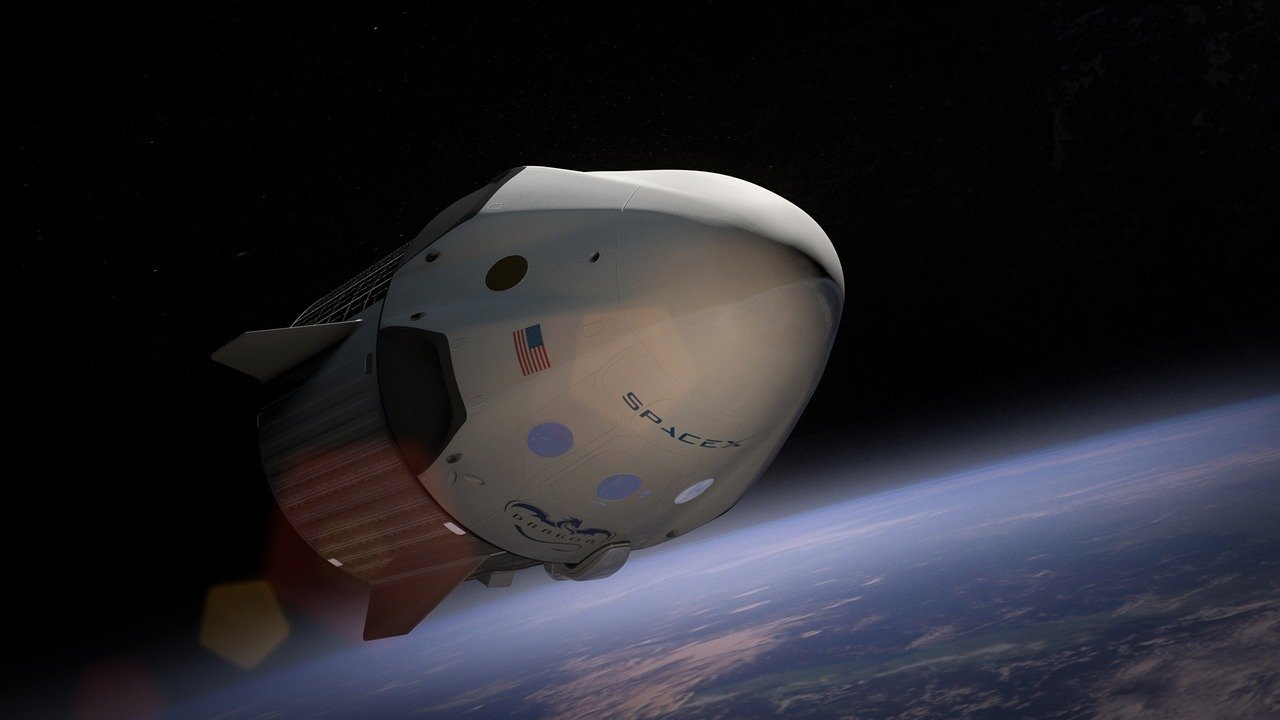
Big things are happening in a tiny Texas town. Located on the southernmost tip of the state, Boca Chica has rapidly become a popular destination amongst space enthusiasts from around the globe.
Why? It all started back in 2013, when Elon Musk, founder of aerospace company, SpaceX, announced that he was considering the small coastal town as the site for where an interplanetary spaceship would be built.
The SpaceX Demo-2 test flight for NASA’s Commercial Crew Program was the first to deliver astronauts to the International Space Station and return them safely to Earth onboard a commercially built and operated spacecraft.
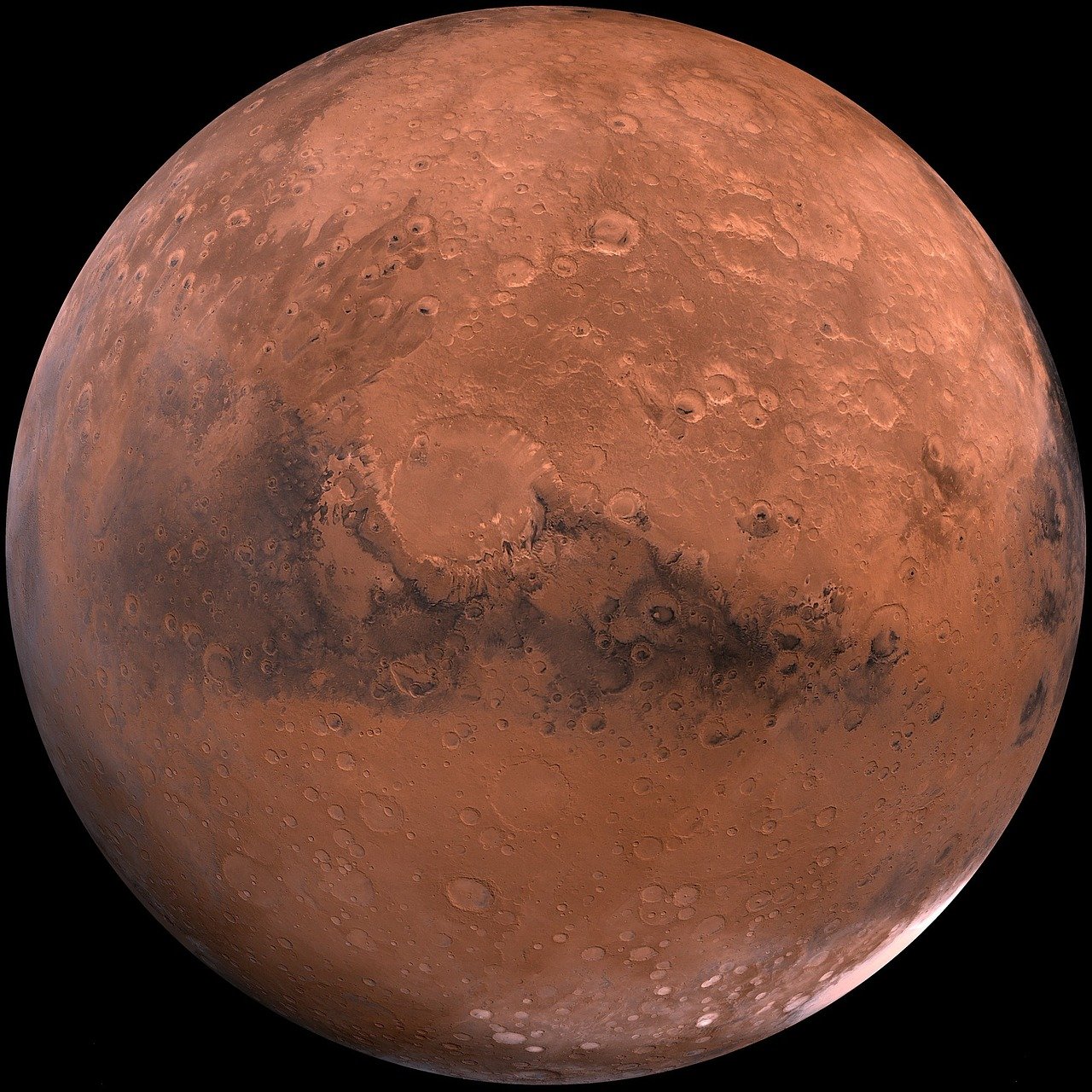
Back in the day when I was sent on a trip to visit a customer, supplier or to a meeting we called it 'going on a jolly'. There’s a lot of talk right now about sending people to Mars; a Mars Jolly. There’s even talk of making this a one way trip and not bringing them back. There’s no shortage of volunteers.
I'm not convinced by any of these reasons for going to Mars. I'm definitely unconvinced of the sense of colonizing Mars. Here's my reasons why.
Ensuring the survival of our species
It is highly likely than humankind will be killed off by some kind of global disaster in the not too distant future. Assuming that we avoid destroying ourselves, there are a number of likely disasters that could annihilate us. We could get hit by a large comet or asteroid just like the one that killed off the dinosaurs about 66 million years ago. Alternatively one of the many candidate super-volcanoes could erupt just like the one that was responsible for the great dying 252 million years ago that wiped out over 90% of marine creatures and 70% of land creatures on our planet. Another dangerous event is the reversal of the planet’s magnetic field. These reversals happen randomly. Unfortunately they are also associated with a decrease in the magnetic field strength. There’s lots of speculation on what the effect might be on humanity during a reversal and field reduction. Most likely is that the reduction will allow an increased solar wind and cosmic ray flux on the surface. Absent SPF-1000 sun blocks for humans and animals this increased UV flux is likely to be very harmful, possibly fatal.
I have often heard the argument that we need to go to Mars to save humanity but I don’t believe it. It sounds a bit like Scientology or some other neo-religious belief system is at work. What form of narcissism makes people think that humankind is unique or valuable in the universe. Unless you believe that humanity is unique then you must believe that life will exist in our universe whether humans exist or die out. Considering the huge expanse of the universe humankind is less than irrelevant. We shall live, we shall die out, and perhaps be replaced on our planet by something else, then our planet will be consumed by our sun and the universe will not give a damn or even notice.
Getting to Mars takes about 6 months assuming that the Earth and Mars are appropriately aligned. As soon as humans leave Earth orbit they are no longer protected by the Earth’s magnetic field. For humans to get to Mars they will have to survive this time while being bombarded by a high level of ionizing radiation from cosmic rays and the solar wind. Mars has no magnetic field and is therefore open to constant bombardment from cosmic rays so humans on the surface will be continuously exposed to cancer causing radiation. The only way to survive will be to go underground far enough to be shielded.
Since Mars is constantly bombarded by radiation nothing will grow on its surface, even if adequate water was available. Growing food will have to be done underground. Water will have to be fetched from the poles as ice, melted for water and electrolyzed to produce breathing oxygen and hydrogen fuel. This will require huge quantities of energy that can only be supplied by nuclear reactors.
Discovering life on Mars
I’m not at all convinced that it is necessary to send people to Mars to find evidence of life. For every manned mission to Mars I expect we could send more than ten unmanned missions for the same cost. In an age where artificial intelligence is developing fast I expect that unmanned Mars missions will both spur and benefit from AI. I also think that in this age of the risk averse one death in pursuit of this mission will close it down forever. Better to risk machines than people if only for the political optics.
If or when we discover life on Mars, what then? Shall we speculate that life on our planet was seeded by panspermia from Mars? It would seem that if this is the case we shall then wind ourselves around the axle wondering where life on Mars came from. Of could well be that life on Mars was and Earth was seeded from a common source outside our solar system. If on the other hand Mars DNA is fundamentally foreign to Earth DNA then we shall have to conclude that life began on both planets independently, or was seeded on these planets from different sources.
What then? Will the cost have been worth the effort? I recall that at the pinnacle of the Apollo program it was cancelled not least by an outpouring of claims that it was all too expensive and that the money should be spent on social welfare programs instead. Cancellation was also spurred by serious concerns about the safety of the Apollo missions and that the political objectives set out by President Kennedy of putting a man on the moon and returning him safely to Earth had been achieved.
Improving the quality of life on Earth
In my opinion the argument that progress is only possible by the serendipitous cross fertilization of technology from a ‘wartime’ mission is at best a specious one. It is capitalism that has the track record of developing technology that improves the quality of life on Earth. Consider the development of the cellular telephone system with all its technology challenges, capitalization challenges and marketing challenges. All of this driven by public demand and not driven by government planning.
Growing as a species
It seems to me that our species has already grown too large to be comfortably accommodated on this planet. That may be the thinking behind the idea of transferring a significant portion of our population to Mars. Unfortunately life on Mars will be very restrictive and not at all like immigration to the Americas in the past.
Mars has a very small magnetic field that is incapable of protecting the surface from an avalanche of ionizing radiation that is incompatible with life as we know it. It might be possible to terraform Mars to support an atmosphere but it will not be possible to create a protective magnetic field.
Living on Mars will have to be subterranean to escape the deadly radiation on the surface. How living as a troglodyte on Mars will allow our species to grow is beyond my understanding.
Demonstrating political and economic leadership
This reason is way too silly to be taken seriously. Are we proposing that billions or trillions must be spent in travel to Mars in order that the USA be taken seriously? Why not demand that our elected officials behave seriously or better yet that our electorate vote only for serious people. It may not work but it will be much cheaper to find out.
In conclusion I find the reasons given for tripping to Mars are mostly silly. They seem to be spawned by some quasi-religious belief in the specialness of the human species within the universe. I disagree with this point of view. We are an example of life in a universe that is likely teeming with life. Our passing as a species will be little noticed by the universe at large which will continue to operate in its own way whether we are around to see it or not.