My Favorite YouTube

I admit to being an avid YouTube watcher. While I find lots of interesting, amusing, and educational videos on the site I do have my favorites. I recommend that you try them out.

Sampson Boat Co

Sampson Boat Co

These videos follow Leo Goolden as he rebuilds the pilot cutter, TALLY HO, from the rotting keel up into an ocean-going wooden sailboat, with the intention of partaking in the world famous Fastnet yacht race in 2027, 100 years after TALLY HO won the race in 1927. When he purchased the boat in 2017 for $1, she was a rotten hulk, but over the next 7 years, with the help of a lot of amazing people, he rebuilt TALLY HO from the keel up – documenting and funding the process through his YouTube videos. TALLY HO is now sea worthy and the adventure continues with a huge voyage ahead of her as she is sailed from the state Washington, where she was rebuilt, through the Panama Canal and across the Atlantic Ocean to England to qualify and partake in the Fastnet.

CruisingTheCut

Cruising the Cut

David Johns quit his job in 2015, sold his house and went to live on a narrowboat. Initially he produced videos of his travels, he now documents various aspects of canal life. David takes you on a grand tour of the British canal network in his narrowboat, a specialized canal boat found in England. He has recorded almost 400 videos of his adventures. See the English countryside close up while experiencing the life aboard a canal boat and meet lots of people along the way.

2vintage

2Vintage

This channel is all about having fun. Joe Weber and his brother Charlie go on some crazy road trips where they pick up unique and rare motor bikes, quads, go karts, snowmobiles, etc. repair and rebuild them and test them out. Joe usually buys these machines in a non-running condition then displays his expertise in diagnosing why the machines don’t work. He then repairs and rebuilds them into running condition and either adds them to his collection or sells them at a profit.

Cutting Edge Engineering Australia

Cutting Edge Engineering

CEE is a machining, welding & hydraulic repair workshop based near Brisbane, Australia. Kurtis & Karen run the business with Kurtis doing the welding, machining and fabrication and Karen producing the videos. CEE specializes in helping business in mining and earthmoving to keep their machines running smoothly. Kurtis loves working on broken parts and the bigger the better. They upload new videos every week showcasing machining, welding, line boring, honing and all the other awesome stuff that goes down in their workshop. Learn how they tackle different projects and see the satisfaction of creating something useful. You will be amazed at how one man can repair and replace large broken parts for complex machines in some very clever ways.

The Australian Armour & Artillery Museum

Australian Armor

The Australian Armour and Artillery Museum opened to the public on Saturday the 6th of September 2014. The museum is privately owned and is the largest museum of its kind in the southern hemisphere. They are in a suburb of Cairns, North Queensland, Australia. They are dedicated to the collection, preservation, restoration and display of Armored Vehicles and Artillery from the 1800’s to the present day, including exhibits from the USA, UK and USSR. The collection includes armored vehicles and artillery from both world wars with a particular focus on WWII. Currently the collection consists of over 200 armored vehicles and artillery pieces, many of which will not be found anywhere else in Australia. They are constantly on the lookout for additional pieces of equipment that will make the museum a richer experience for those visiting. They produce a video every week entitled, Workshop Wednesday, where they show current activities in their restoration workshops.

Midlife Stockman

Midlife Stockman

Sean Stockman had a bit of a midlife crisis when he decided to devote some of his time to helping his community in a unique way. He searches around the poorer neighborhoods of Detroit to find homes of the less fortunate that badly need a landscaping makeover. After seeking permission from the home’s resident, he cleans up the landscaping, cutting the grass, edging and trimming the trees and shrubbery, all for free. His activities and those who support them form a community of help that believes that they can do more by working together. As you watch his videos you will see the needs of real people, and how cleaning up their yard and cutting their lawn can greatly improve their condition.

Sabine Hossenfelder

Sabine

Sabine Hossenfelder has a PhD in physics, and is now semi-retired from the elementary particle field. She is author of the books “Lost in Math: How Beauty Leads Physics Astray” (Basic Books, 2018) and “Existential Physics: A Scientist’s Guide to Life’s Biggest Questions” (Viking, 2022).

She provides as simple as possible, but not any simpler Science and technology updates and summaries. No hype, no spin, no tip-toeing around inconvenient truths. She presents explanations of new and old topics in physics with a gifted ability to explain them clearly and concisely. You will find explanations of some of the most basic questions about the nature of reality in these videos. Currently 5 videos a week are produced (Tue-Wed-Thu and Sat-Sun), with early access for channel members.

Mind of Feynman

Feynman

This is a series of talks on modern science narrated by an AI reproduction of Richard Feynman, in my opinion the best physicist born and raised in the USA in the 20th century. While the use of an AI narrator is distracting the content is well worth the visit. You will find answers to many of the questions that you might have about the universe and the nature of reality.

Mind of Feynman is a tribute channel dedicated to the teaching spirit, curiosity, and legendary clarity of Richard Feynman. This channel is not officially affiliated with Richard Feynman, his family, or his estate. The goal is to introduce a new generation to his way of thinking — the joy of asking questions, breaking down complex ideas, and seeing the world with curiosity and wonder. The voice you hear is an AI-generated recreation inspired by Feynman’s speaking style, created purely for education, inspiration, and storytelling. It is not original archival audio, and no impersonation is intended — only deep respect for one of the greatest scientific communicators in history. We create content to make physics, critical thinking, and curiosity accessible to everyone — whether you’re a student, or someone who just loves big ideas explained simply.


The Death of Reason

I have lived in the United States of America for almost half my life, immigrating here from The United Kingdom and becoming a US citizen. During my time here I have noticed a number of changes since my arrival, not least the not so gradual change from political thinking based in reason to an age of politics more based on emotional thinking.

The Age of Reason, or the Enlightenment, was a notable era in world history that heavily influenced modern philosophy and government. It was a 17th–19th century intellectual movement emphasizing reason, science, and individualism, promoting rational thought and skepticism over tradition. Its core philosophy focused on replacing superstition with science and skepticism. Its key thinkers include John Locke, Voltaire, Rousseau, Thomas Paine, and Jefferson who advocated for liberty, constitutional government, and the separation of church and state.

The Age of Reason, or Enlightenment, generally ended in the late 18th century, with most historians citing the French Revolution or the start of the Napoleonic Wars as its conclusion. The movement gave way to Romanticism, which emphasized emotion, nationalism, and individual experience over the empiricism and strict rationality of the Enlightenment.

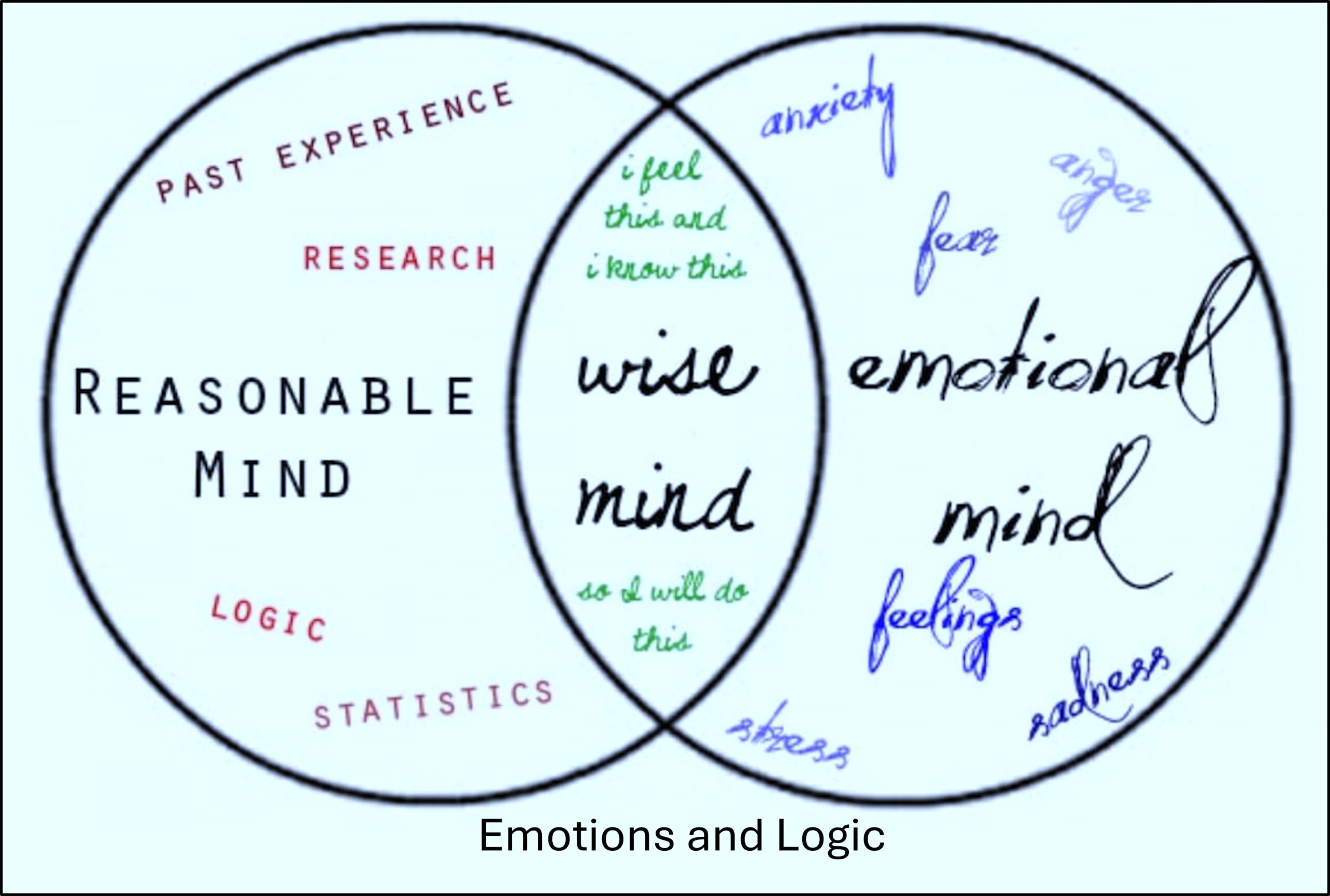
The difference between logical thinking and emotional thinking are that logical thinking is an objective, slow, and analytical process focused on facts, data, and long-term consequences, whereas emotional thinking is a subjective, rapid, and reactive process rooted in personal feelings, values, and immediate survival needs. Balancing both, often called “wise mind,” is ideal because logic offers structure while emotions provide insight into care and motivation. Sadly, I detect that this balance is rapidly fading from American politics.

Rational vs Emotional Thinking

Emotional thinking, or emotional reasoning, causes individuals to treat feelings as facts, leading to distorted perceptions of reality, flawed decision-making, and increased anxiety. By relying on emotions rather than objective evidence, people often experience negative thought cycles, strained relationships, and reduced workplace performance.

There are significant consequences of emotional thinking including a distorted reality where feelings are interpreted as truth; Impulsive decision making based on a temporary emotional state; a worsening of anxiety, depression and low self-worth; misinterpreting the actions of others because of personal emotional states causing conflict and resentment.

Emotional thinking in American politics, driven by anger, anxiety, and moral conviction, has created a deeply polarized environment, accelerating affective polarization where opposing sides are viewed as immoral or threats. This emotional surge increases civic engagement, such as voting and volunteering, but also fosters the spread of misinformation, the normalization of political violence, and severe declines in mental health.

Citizens increasingly view opposing parties not merely as wrong, but as immoral, unintelligent, and a direct threat to the country, leading to increased hostility. This can cause people to more likely to accept and share misinformation that aligns with their partisan identities. In addition, emotional distress, coupled with conspiratorial thinking, is linked to a higher tolerance for political violence and a willingness to reject democratic norms.

While often viewed negatively, scholars note that emotions like passion, hope, and empathy are also vital for driving political participation and democratic engagement, not just hostility. However, the current political landscape is heavily dominated by affective polarization, where the emotional distance between groups is rising

The consequence of these changes over the years is that many don’t want to be confused by facts and data that contradict their internal feelings. They are chained to their beliefs and do not wish to be deviated from them regardless of objective reality. There’s also a great amount of political lying occurring to both support and challenge those beliefs. It’s becoming more and more difficult to winnow out the objective truth from a barrage of falsehood. While I stubbornly cling to my search for empirically supported objective truth in a sea of lies, other grab the nearest ‘fact’ that fits their worldview to run with. I long for the America that was and weep for the country it has become and is becoming.

Further reading:

  1. Age of reason – Wikipedia
  2. The End of the Age of Reason? – The Globalist
  3. How emotions affect logical reasoning: evidence from experiments with mood-manipulated participants, spider phobics, and people with exam anxiety – PMC
  4. Emotional Reasoning and Psychopathology – PMC
  5. The Pros and Cons of Emotive Politics – Braver Angels
  6. Everything You Need To Know About Emotional Reasoning | REBOOT FOUNDATION

The Fat Shot

About a year ago I got tired of being called obese. I got tired of my doctor’s short intake of breath when he checked by BMI number and my blood glucose level. I would claim to have gotten tired of the TV talking heads and their self-superiority when discussing obesity, but I got tiered of them long since for their hypocrisy and their certitude about subjects they can barely spell far less understand, but I digress. Suffice it to say I took on a scunner[1] about the subject.

A little background on my previous eating habits. My father was a POW during WWII for almost five years from June 1940 until May 1945. He was held in a POW camp in Poland. Most of the time they had little to eat. From late 1944 through 1945 until their liberation the POWs had almost nothing to eat. It will therefore be no surprise that I was brought up in a clear your plate household, just like many Americans whose parents endured the Great Depression. That’s where I developed my eating habit of finishing all that was put in front of me.

A large minority of our population have lots to say about obesity and have little reserve about sharing their opinions, especially with folks who are a pounds over a fashionable weight. These ectomorphs[2] are critical of those of us who are efficient consumers of calories, that sometimes causes us to be obese. It turns out that obesity is a chronic, complex disease defined by excessive body fat, typically diagnosed with a BMI of 30 or higher. It is caused by an energy imbalance from high-calorie diets, sedentary lifestyles, genetics, and metabolic conditions, often resulting in severe health risks like diabetes, heart disease, and cancer. Treatment often involves lifestyle changes, medication, or surgery.

I do admit to a sedentary lifestyle. Since I despise those who spends their waking hours in the gym, building a body image concomitant with their aspirational vision of who they should be, losing weight through exercise didn’t appeal to me. By comparison with the gym rats, I just live my life, spending my free time reading books about scientific topics and world history, and occasional brain candy, RC sailboat racing, and riding my E-bike, not activities that take me to the gym. However, in recent times our pharmaceutical industries have developed medications for weight reduction, the so-called Fat Shots.

The Fat Shot consists of a glucagon-like peptide-1 (GLP-1) receptor agonist that is highly effective and is an FDA-approved medications for type 2 diabetes and for chronic weight management. By mimicking a natural hormone, these medications reduce appetite, slow gastric emptying, and improve insulin secretion, leading to significant weight loss and lowered blood sugar. Sounded good to me so I arranged with my doctor to get the Fat Shot.

I won’t tell you which one I chose to use other than it is a name you would probably recognize, but not the two best known ones. It comes in a self-injection gadget that you stab yourself with in a fatter part of your anatomy. It doesn’t hurt and is over in a second. You start at a low dose with an injection once per week, and the dose is increased by month depending on your reaction to the medication.

While it reduces food cravings and does aid weight loss, it does have side effects. The most common adverse effects listed are gastrointestinal, including nausea, diarrhea, vomiting, and constipation. They do not mention digestive gas, both upward and downward. I was most affected by diarrhea and gas, lots of gas, enough to cause a measurable increase in global warming.

The positive side is that my blood glucose fell from the mid 130’s to less than 90, and my weight has so far fallen from a high of 215lbs, a BMI of 35, to 170lbs, a BMI of 26, all in about six months. I certainly feel better and fitter and have more energy to do stuff. I am about to end my shots and will record any rebound, which I hope to avoid. I’ll be sure to post an update of how I get on.

[1]  Scunner – a Scottish word meaning a strong, deep-seated dislike, aversion, or a person/thing causing disgust.

[2] Ectomorphs — An ectomorph is a body type characterized by a naturally lean, slender frame, fast metabolism, and difficulty gaining weight or muscle. Known as “hardgainers,” they typically have narrow shoulders/hips and low body fat. They thrive on high-calorie, nutrient-dense diets and resistance training to build mass.

A Brick for my Dad

Our Veterans Memorial Garden

There are many bricks in the veteran’s memorial plaza where I live in Texas each with a different name and a different story. The brick I want to talk about looks a bit different than the rest and I hope to explain why, and why it sits with all the others.

It all started with a trip to Hawaii to celebrate our 40th anniversary. My wife and I flew to Honolulu a day early so that we could visit the USS Arizona Memorial before we headed off on a seven-day islands cruise. We got on the coach to Pearl Harbor early in the morning and were entertained by our driver with multiple tales of the islands and tourists like us. When he asked for questions one of our numbers asked him why so many Japanese visited the Arizona Memorial. I must admit to a moment of apprehension anticipating his answer but when it came it was quite unlike my unworthy expectations. He asked us all to think about how our world was changed by the Pearl Harbor attack and how the world was changed for the Japanese too. As I thought about his question I thought about my father and his circumstances on December 7th, 1941.

In December 1941 my mother and father were not yet engaged, far less married and I was not yet born. In fact, I was not even a twinkle since I was not born until 1949. On Pearl Harbor Day my father was in a German Army POW camp in Torun, Poland (Camp 17 of Stalag_XXI-A as I recall). Absent the attack his prospects of ever returning home to Scotland alive were vanishingly remote. It goes without saying that such a failure to return home would have seen my parents unmarried and me unborn, and this story unwritten.

The story of how he finished up as a POW is a tragic one, quite embarrassing to Winston Churchill’s reputation and greatly forgotten by military historians of WWII both in the USA and UK. He volunteered for the army in September 1939 the week that war was declared in the UK. He was inducted into the Seaforth Regiment and sent to Fort George, near Inverness in Scotland. After only 3 months training, he was issued a Lee Enfield bolt action rifle and 100 rounds of .303 ammunition and shipped out to France in January 1940 in the 4th Battalion Seaforth’s, part of the 51st Highland Division. The division was initially deployed as part of the British Expeditionary Force (BEF) in France near the Belgian border, then eventually stationed at the northern end of the Maginot Line near Metz, quite separate from the rest of the British Army. Those readers who are military historians will realize that the 51st HD location was a precarious one, although they didn’t know that at the time but soon would.

When the Phony War ended and the real shooting started around May 10th, 1940, the main German armored thrust landed north of the 51st HD, went through Sedan and onward to the English Channel coast near Calais, cutting the 51st off from the rest of the British Army. Elements of the 51st division did take part in supporting French armor assaults northward into the flank of the German penetration but without air support and after the German anti-tank forces worked out how to disable the heavily armored French tanks, these all failed.

The rest of the British Army was famously evacuated from the beaches of Dunkirk between May 27th and June 4th leaving the 51st HD the only British division left fighting in France (the 50th division was in the process of landing at Cherbourg but were soon turned around and sent back to the UK). The 51st, including my father, fell back along the line of the river Somme arriving near St Valery sur Somme on the English Channel coast by May 28th. They were soon engaged by strong mechanized and infantry forces. The danger of being outflanked by German armor on their right drove them slowly back toward their bases of supply at Le-Havre and Rouen. When these bases were cut off, they fell back to St Valery-en-Caux a small town on the channel coast where they attempted to hold a perimeter while awaiting to be rescued by sea.

St Valery Map

But rescue became impossible when the beaches came under direct artillery fire. They might have been saved if earlier action had been taken, but Churchill had delayed efforts to rescue the 51st and to keep them in the fight as a political bargaining tool with the French to keep them from capitulating; now it was too late.

On June 12th, 1940, the French forces supporting them surrendered and, absent food, fuel, ammunition and medical supplies, and with no embarkation possible the 51st was surrendered to the famous German general Erwin Rommel.

Gen Rommel and Gen Fortune

The 10,000 men of the division, mostly Scottish, were marched off as POWs to an uncertain future. At the time of this surrender the 51st Highland Division was surrounded by the 5th and 7th armored divisions, the 2nd motorized division, the 11th motorized brigade, the 57th, 31st, 12th, and 32nd infantry divisions of the German Army. A small force called Ark Force did escape through German lines to Le-Havre and returned to the UK, but my father was not one of the fortunate ones.

He and his buddies were stripped of all that was valuable the marched eastward toward Germany. Besides marching they were carried in coal barges, in trucks and finally by train in cattle cars to Torun, Poland which is near Gdansk, or Danzig as it was called in those days. Here they entered into the German camp system, in his case Stalag XXI-A.

Dad as POW, top row 2nd left

They were organized by service, rank and nationality. The British were treated better than most, albeit not all that well. They were issued rations of 1/5th of a loaf of black bread and a bowl of soup per day. Why 1/5th of a loaf is a mystery that only the Germans knew the answer to. At the beginning the bread was okay and the soup had recognizable vegetables and some protein in it. As time passed the ‘bread’ became sweepings and the soup became warm water.

As a private soldier my father was obliged to work in either the coal mines or on local farms. He volunteered to be a farm worker because it allowed him access to foodstuffs not available in camp that he could trade for. The POWs were sustained by Red Cross parcels, actually boxes, many supplied from the USA through Switzerland. They were supposed to receive one parcel per month but got far fewer, and sometimes none for months. The parcels contained cans of coffee, cans containing American cigarettes, cans of butter, chocolate, candies and other highly desirable products that were rarely consumed by the POWs but used as trade goods to swap for potatoes, carrots, eggs and other staples from local farmers. It was these staples that kept them alive through the next five years.

He escaped a few times; well, he walked away from the farm he was working on, but with little success. When recaptured, prisoners were yelled at, perhaps hit with a rifle butt a few times, and then they were sentenced to 21 days solitary in the camp prison, the cooler. His most successful escape attempt reached the docks at Gdansk where he and his buddy were caught climbing the dockyard fence next to a Swedish cargo ship. So, he was returned to the camp and his 21-day penance before heading out on the next work party to another farm. To my father it was all an adventure to escape the monotony of camp life. His family circumstances before he volunteered was rough, so I don’t think POW life was too unsettling for him, early on at least. He sent a postcard home to his sweetheart, my mother to be, consisting of a photograph of his hut and its residents and telling her that he was alive (I still have it). They corresponded by letter throughout his captivity maintaining their romance from afar. There is a family story that towards the end of the war, while he was again in solitary, he was informed by the guards that his older brother was in camp looking for him. Having been captured in Tobruk in North Africa and having had many adventures before pitching up in Poland his older brother, my uncle Jim got back to Scotland the same week as my dad.

In December 1941 my father had been a POW for over a year and a half. Although the Germans had attacked the Soviet Union in June that year the POWs had little hope of an end to the war in circumstances that would see them return home victorious, or indeed at all. Then Pearl Harbor happened and when Churchill was informed of the attack wrote that he “…went to bed and slept the sleep of the saved and thankful”. I suspect that the POWs had a similar reaction when they found out than America had entered the war on their side. But for this entry into the conflict, Germany would never have been defeated and my dad would never have been liberated.

Towards the end of 1944 and beginning of 1945 the camps in Poland were emptied and the POWs were rounded up and driven west to escape the advancing Soviet forces. This little-known episode is called “The March” by those who took part in it. Over a period of about four months from January to April, they were marched about back and forth across Poland and Germany for more than 500 miles in some of the most brutally cold conditions. There was very little food and those who fell out of line to raid a farmer’s field for some potatoes were often shot. Estimates vary but perhaps 80,000 allied POWs took part with between 2000 and 3000 that died on the way. One morning in late April or early May 1945 my father woke in a field near Hamburg. The guards had gone, and soon American forces arrived – he was free!

My dad returned home to Scotland and soon persuaded my mother to marry him. They settled down in central Scotland and raised two boys, my elder brother and me. Although he worked pretty much every day of his life my father’s health was affected by his time as a POW. He died young, not quite 55, and a little over a year after my mom died. She was barely in her 50’s when she died having been seriously ill since her early 30’s.

So, what has all this to do with a brick in our Veterans Memorial Garden? Well, I was telling a neighbor this tale a number of years back. He is a Vietnam veteran who was seriously wounded flying helicopters in the 1st Cavalry. He was interested in my dad’s story and my experience on the bus heading to the Arizona memorial. It was he who suggested the brick. So that is why the brick is there, not just to memorialize my father but to remind folks of what the others memorialized there have done to rescue freedom, and to place my dad’s name in a country he loved and among those who saved his life and who gave me mine.

Dad’s Brick

But for America and Americans, my dad would not have survived, and I would not have been born and would never have emigrated to the United States of America and become one of its citizens – and I would never then have placed the brick.

Further reading for the military history buff:

  1. Churchill’s Sacrifice of the Highland Division, by Saul David
  2. The St. Valery Story, by Ernest Reoch
  3. The Highland Division, by Eric Linklater
  4. St Valery, the impossible odds, edited by Bill Innes
  5. Return to St Valery, by Derek Lang
  6. https://en.wikipedia.org/wiki/Stalag_XX-A
  7. https://en.wikipedia.org/wiki/Red_Cross_parcel
  8. https://en.wikipedia.org/wiki/The_March_(1945)

You might like reading a more detailed account of my dad’s wartime experiences at my brother’s blog here.

Bladder Cancer — the unfashionable disease

One of the downsides of getting old is getting sick. I never had any serious illnesses when younger and working. After I retired things changed. Like an old car my bits started to wear out and seize up.

We had moved into a retirement community when my wife retired, but I kept working. The community we moved to is like a vacation resort for geezers with lots of activities to pursue. After about a year commuting to work and back every day while missing out on all the fun to be had at home during the day, I decided to hang up my slide rule and retire.

In retirement I played golf as many as four times a week and renewed my long-lost interest in building and flying radio-controlled aircraft, drones, and sailboats. I also took up painting, mostly wild and colorful abstract cubist paintings in acrylic, and some oil on canvas of more demure subjects. I was taking full advantage of the activities that our community offered when I was diagnosed with bladder cancer.

I won’t go into the details here of how I found out I had bladder cancer, and the story of my treatment and complications. If you are interested in the gory details, you can find them in this attached story. Suffice it to say that I had a long journey with the disease, finally having my bladder and prostate removed to be replaced by a stoma and the exterior plastic urine bag that I wear today. It’s not a great solution but it’s tolerable and allows me to wake up each morning on the green side of the grass. A negative consequence of the surgery was the loss of function of my wedding tackle, but at my age that too is tolerable.

In the midst of this journey, I had a negative finding from a colonoscopy. They found something suspicious near the junction of my transverse colon and descending colon. After checking that this condition, unlike a fine wine, would not improve with age, I agreed to having partial colorectal surgery. The surgery was performed using a DaVinci robotic surgery machine. As a confirmed technophile I insisted in being introduced to this apparatus in the operating theatre before they turned my lights out. I awoke missing a few inches of my colon and with four ‘stab’ wounds in my lower abdomen, but no stoma and no bag – whoopee!

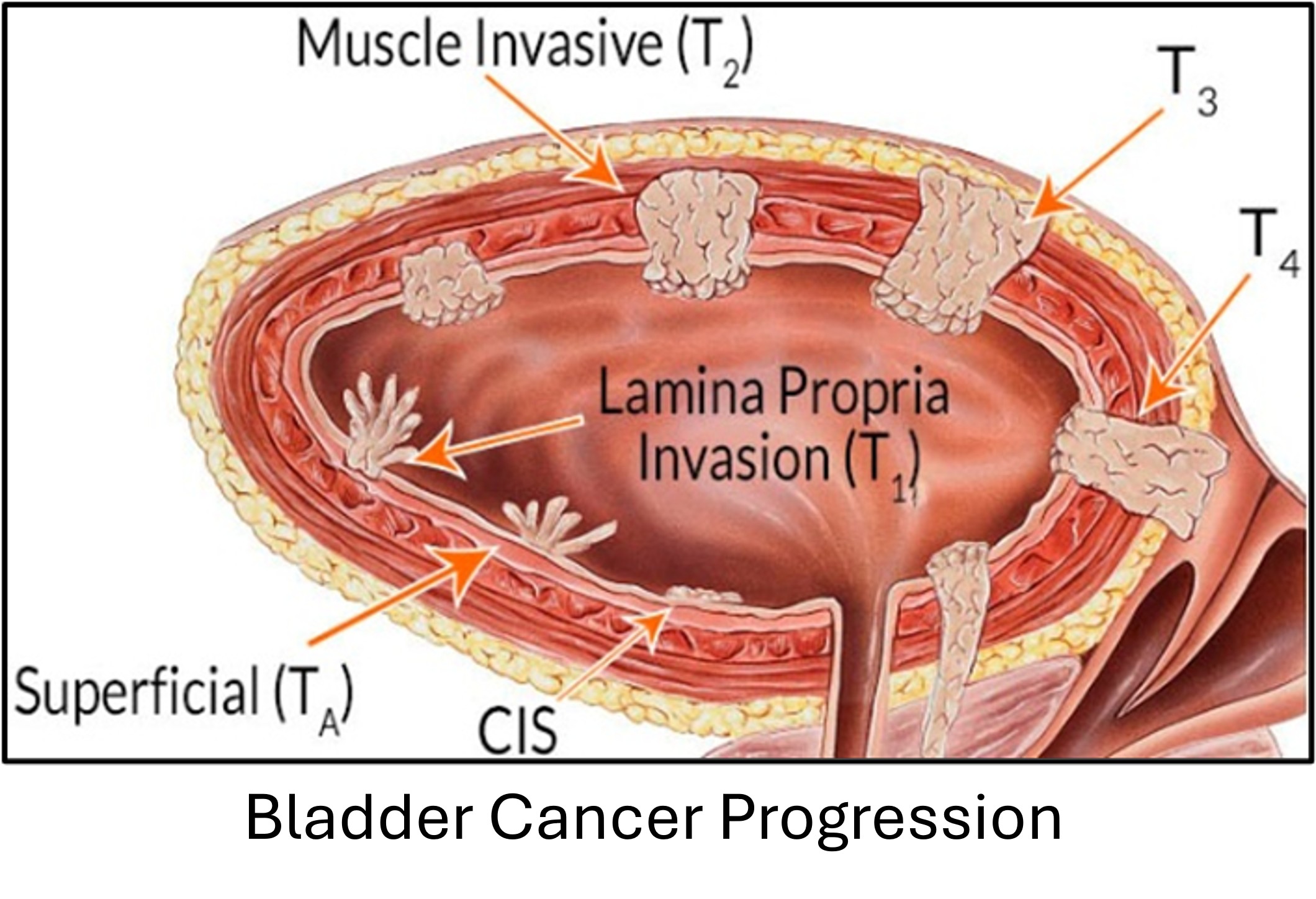
I don’t know what caused me to have the issue with my colon, but I do know what caused the bladder cancer, smoking cigarettes which I did for fifty years. Smoking causes about 90% of bladder cancers – who knew? My advice, beyond stopping, is that if you have incidence of dark pee, get tested. Bladder cancer is eminently treatable if caught early. If the cancer grows through the bladder wall into the muscle, then it becomes much more serious. To avoid colon cancer, get your regularly scheduled colonoscopies. Again, when caught early it is successfully treatable. Yes, I know the reluctance to go through the pre-colonoscopy purge process, but it’s better than a big stoma and colostomy bag, always assuming you survive that far.

So, in conclusion, the older you get, the more you need to take care of yourself. Stay fit and active and pay particular attention to your health and any symptoms of your stuff going wrong or breaking. Try to stay on the green side of the grass and have fun doing so.

The UK Post Office Scandal


The UK Post Office Scandal was a massive miscarriage of justice where faulty Fujitsu’s Horizon software used by the UK Post Office falsely reported financial shortfalls occurring in sub-post offices, leading the Post Office to wrongly prosecute over 700 sub-postmasters for theft and false accounting. Many faced prison, bankruptcy, and severe distress, with 59 deaths of victims reported, at least thirteen of them suicides. So far, I’m aware of no member of the government or the software provider that has been imprisoned. This scandal has been called the UK’s most widespread miscarriage of justice.

The Post Office itself took many cases to court, prosecuting 700 people between 1999 and 2015. Another 283 cases were brought by other bodies, including the Crown Prosecution Service (CPS).

In 2017, a group of 555 sub-postmasters – led by campaigner Alan Bates, who was subsequently knighted — took legal action in a landmark court case against the Post Office. In 2019, the Post Office agreed to pay the group £58m in compensation, but much of the money went on legal fees.

However, the action paved the way for dozens of sub-postmasters to have their convictions quashed in 2021. The episode came to wider public attention at the start of 2024 when it was depicted in an ITV drama, Mr. Bates vs The Post Office.

A public inquiry into this scandal was chaired by Sir Wyn Williams. The inquiry found profound, widespread human suffering, including over 10,000 affected, ruined lives, and 13 potential suicides had been caused by the Post Office and its faulty software. As of September 2025, over £1.23 billion ($1.67 billion) in compensation has been awarded to more than 9,100 victims. The final version of the inquiry report is expected to be published in 2026.

This whole mess is a salutary lesson on the excesses of government persecution of its citizens, and the lengths people will go to CYA. The level of lying and deception presented to the statutory public inquiry is appalling, but, like always, the government covers its posterior with a straight face and a sociopathic attitude.


Malcolm Allan and MV San Delfino

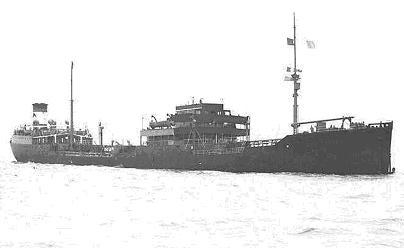
Had he survived WWII Malcolm Allan would have become my uncle in-law on the marriage of my maternal uncle George to Malcolm’s sister Florence. Sadly, he did not survive the war, dying aboard the petroleum tanker San Delfino when it was torpedoed by a German submarine near Cape Hatteras in 1942.

During WWII the school leaving age in Scotland was at the age of 14. As such, when Malcolm left school, he was quickly drafted, not into the armed services, but into the Merchant Marine. After his first transatlantic voyage as a cabin boy, he was so terrified by his experience that while on leave, he refused to go back to sea. The local police came to his home, arrested him and he was forced to go to sea once more, this time aboard the MV San Delfino, an 8,072-ton tanker built in the UK in 1938.

Before the war, the tanker San Delfino worked routes from Mexico, the Gulf of Mexico, and the East Coast of the United States to the United Kingdom. At the outbreak of World War II, San Delfino underwent conversions to add a 4-inch deck gun mounted at the stern and four machine guns located both fore and aft. The vessel also carried two Hotchkiss machine guns and a Lewis machine gun, making it a formidable opponent to any U-boat.

Soon after Germany declared war with the United State on December 11, 1941, the German U-boat commander, Vizeadmiral Karl Dönitz, began plans to strike a swift and devastating blow on the United States’ eastern seaboard. His plan was called Operation Paukenschlag, also known as Operation Drumbeat. In late December, five U-boats set sail, and the first torpedo strike occurred on January 11. In early April 1942, Operation Drumbeat continued with a fourth wave of U-boats, including U-203, which arrived off the East Coast shortly after a fuel stop in the Azores.

In the early morning hours of April 9, 1942, as U-203 patrolled the waters, it spotted San Delfino traveling alone from Houston, Texas to Halifax, Nova Scotia and on to the United Kingdom. U-203 fired one torpedo, striking the starboard side near the number two or number three tank, instantly igniting some of the 11,000 tons of aviation fuel carried by San Delfino. A second explosion erupted, possibly from either the ammunition cargo or the weapons on board. Flames ignited all over the vessel.

The call to abandon ship was made and two lifeboats were lowered. One of the lifeboats, however, got caught in the current and was dragged into a pool of burning fuel, horrifically killing the 24 crew members and four gunners in the boat. Malcolm was in the second lifeboat. He was only 17 when he died. The master, 19 crew members and two gunners in the other lifeboat were picked up by HMS Norwich City (FY-229) and taken to Morehead City, North Carolina. Of the 50 crew members on board, 28 lost their lives because of the attack.

MV San Delfino lies in 110 feet of water at 35°23’52.04″N, 75°6’57.92″W off Cape Hatteras on the east coast of the USA. She is now a popular dive sight, and my uncle’s grave.

San Delfino Casualties

Cheap Gas and Radiation

It seems to me that the choice is a simple one; do we want cheap gas and radiation or do we not. We have survived for seventy years with the threat of nuclear Armageddon. But our adversaries were mostly sane and had similar objectives to our own. Now we face an adversary who has Armageddon as their ultimate objective, and they do not seem to be guided by the usual mores of civilized behavior that is to be found in the rest of humanity.

My father served in WWII, spending almost five years as a POW mostly in Poland. He well remembers Neville Chamberlain getting off and airliner while waving a piece of paper and declaring, ‘Peace in our time.’ That then was the poster board image of appeasement that my father and his fellow soldiers were obliged to pay for.

For almost fifty years a stream of American Presidents and diplomats have similarly alighted from airliners while declaring their version of ‘Peace in our time.’ Meanwhile Iran has used its oil income not to emancipate its people but to fund and encourage terrorist groups around the middle east and the rest of the world. Now they are close to having atomic bombs with no unwillingness to use them while we bitch about the price of gas.

The price of gas has certainly increased during the current conflict, although for most not as much as it was for Californians beforehand. The major reason that oil tankers are not transiting the Straights of Hormuz is that the owners cannot obtain voyage insurance from Lloyds of London or any other marine insurer. Once the tankers can be indemnified for their voyage the cost of gas will come down. The question for Americans to answer for themselves is what cost they are willing to endure for cheap gas. Are they willing to allow Iranian terrorists to have nuclear weapons that they may mount on their rockets to threaten their neighbors and all of Europe with. Perhaps Iranian sponsored terrorists will sail a nuke up the Mississippi in a barge to park it in St. Louis and issue blackmail demands before detonating it anyway.

It seems to me that the choice is stark, but since I’m much nearer the end of my life than to the beginning of it, I’ll let others decide how they want to live in their future since that future is likely to be much longer than mine.

AMN, 4/13/2026

Nuclear Power – From Long Ago and Far Away

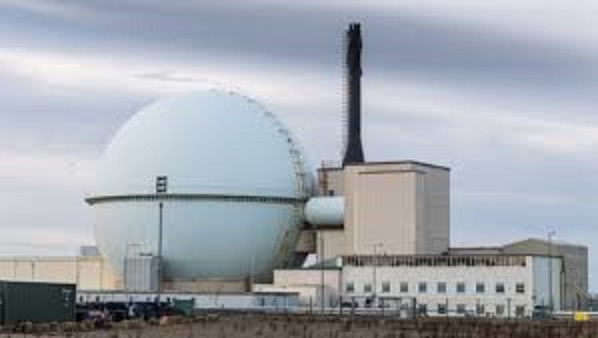
The last place I lived in the UK before coming to the US was a small village in the west of England. The village was distinguished by its great country pub, its history that went all the way back two thousand years to Roman times, and by its close proximity to a nuclear power station. Our cottage sat on the outskirts of the village with a clear view of the power station about two miles across farmer’s fields. On cool, calm nights I could hear the power station’s PA announcements in the faint distance.

I never considered it to be dangerous to live there although many others at that time were demonstrating against nuclear power with the expectation that these stations would explode like an atomic bomb. There was a heated political debate going on in the UK at that time about continuing with nuclear power. In the pub one night I asked one of my neighbors about his opinion on this topic. He was set against nuclear because of its perceived dangers. I pointed out that although I considered the dangers to be low they were at least democratically shared amongst all the consumers of the power generated. I continued by comparing this to the use of coal power which in the UK at that time in an average year killed about 50 miners and retired about 3000 with health issues, mainly lung disease. My neighbor replied that since he wasn’t likely to become a coal miner he much preferred coal power to nuclear where he did share a risk. As someone who comes from a coal mining ancestry I was not best pleased with his opinion, but I let it pass.

My only regular contact with the power station was the weekly servicing of a radiation monitor that was mounted on a power pole beside the road just over our garden hedge. Since I was working most days I didn’t see this happen very often. One day that I was at home they turned up as I was mowing the front yard. A small white van pulled up. The driver got out and removed an extendable ladder from a rack on the van roof. He placed the ladder up against the power pole and extended it up toward a small box attached to the pole. A young lady then emerged from the van. She was dressed in a white boiler suit and wore a white hardhat. Carrying a clipboard she climbed the ladder and unlocked the box. She then removed the radiation monitor and looked at it – then she screamed. The scene was like a cartoon. She seemed to descend the ladder without touching the steps and while turning around in midair with feet pounding. The clipboard and hardhat went one way as she ran up the road in the other direction, still screaming. My life passed in front of my eyes – were we all going to die of radiation poisoning?

As it turned out we were not in any danger. The lady returned when she calmed down, picked up her hardhat and clipboard, and climbed back up the ladder where she again read the display on the monitor. When she came back down she noticed me leaning on the handles of my lawnmower and staring at her in astonishment. She explained that she was terrified of spiders – arachnophobia – and had encountered a really large and hairy member of the species when she opened the box, thus explaining the histrionics. At this point she got back into the van, the driver collected the ladders and placed them back on the roof rack and the drove away. I believe my heart was still racing an hour or so later but I put it down to the yard work.

As I mentioned above, there was a vigorous debate about nuclear power going on in the UK at this time. The UK had experienced one of the worst nuclear accidents in 1957 at Windscale, Cumbria, when one of the reactors designed to produce plutonium and tritium caught fire and spewed radioactive contaminants into the atmosphere. This reactor design consisted of a large pile of graphite bricks with horizontal holes drilled through the pile. Fuel cartridges were pushed through the holes to become irradiated before falling out the far end into a water pond to cool. This whole arrangement was cooled by atmospheric air that got sucked in at one end and sucked out the other end by natural convection by being directed up a chimney and vented to the atmosphere.

Windscale Reactor Pile

If you imagine that this arrangement sounds dangerous, it is, but the government wanted the plutonium and tritium for the UK nuclear weapons program. When the fire occurred and vented the radioactive contents of the fuel bundles into the atmosphere, the UK government hushed it up lest public opinion endanger their nuclear weapon ambitions.

Since the inception of the idea of using nuclear reactors to generate electricity a number of reactor designs have been produced and distributed throughout the world. The Windscale experience led the UK to develop the Magnox Gas-Cooled Reactor design for use throughout Britain. This reactor is a graphite-moderated CO2 gas-cooled design.

Magnox Reactor

This design is not only a reasonable one for producing electricity, it’s also a weapons-grade plutonium generator. The one next to my house was one of these reactors and holds the record as the longest serving nuclear reactor in the UK.

In the midst of the nuclear debate in the UK, our local power station decided to open its doors to the public to let them see the internal operation of the power station. It was to be open on a Saturday and Sunday to conduct guided parties of the public around the power station. I had to go see. There were hundreds of people there awaiting their tours but it was all well organized and I was quickly part of a group led by a power station worker in the dress uniform of white boiler suit and white hardhat.

The Reactor Next To My House

There were two reactors in the power station, both constructed of prestressed, reinforced concrete. At the bottom of each reactor, there were a number of huge electric motors that drove the fans that circulated the carbon-dioxide gas to cool the core. As we followed our guide around the cylindrical concrete construction of the reactor we could feel the warmth from the walls, It was quite toasty in the reactor hall. We finally emerged out of a door into a large hallway that stretched for some distance. In one corner there was a large grey-green metal machine that looked like some kind of alien robot. A lady in our party approached our guide, pointed at the machine, and asked, ‘Is that the reactor?’ Our guide answered, ‘No, that’s the refueling machine.’ ‘Well, where is the reactor’ she asked. ‘You’re standing on it’ the guide replied. I think she must have jumped about a foot in the air before scuttling off through the door and down the stairs to safety. It was hilarious. I did wonder what she thought she had been looking at as we climbed the stairs around the concrete edifice. Despite this lady’s reaction, the weekend was a resounding success with thousands of visitors over the two days.

The nuclear reactors in use today for the generation of electrical power were designed during the era of the Cold War. These designs were substantially motivated by military objectives; either to produce fissile materials or to power warships. Efficient power generation was of course the main aim, but the military requirements did compromise their design. Perhaps the most hazardous design was that used in the Soviet Union, including the one in Chernobyl. It uses boiling water and a graphite moderator.

Chernobyl Reactor Design

When the coolant level fell, the hot graphite was exposed and reacted with steam to produce a large bubble of hydrogen. When the hydrogen ignited it blew the top off the reactor as well as blowing out the bottom. The result was that the reactor core melted into a kind of lava and flowed out of the containment and into the basement. All of this was caused by a rushed safety test that was conducted by operators and managers who were being forced to meet an artificial schedule or suffer the wrath of the Party bosses.

In the case of the Fukushima meltdown, it was not a reactor design flaw that caused the accident, it was the installation of the auxiliary support systems that failed to take into account the extraordinary circumstances that befell the reactors. The Fukushima reactors were a boiling water design that during a shutdown required that the primary coolant be circulated through the core until its temperature fell to safe levels. The reactors had steam-driven pumps to circulate the coolant with electrically powered backups used as the core cooled and the steam pressure fell.

Fukushima Reactor

The electrically driven pumps could use the power being generated by one of the other reactors, assuming it too was not in shutdown. In addition, they could use power from a dedicated conventional power station located some distance away. As a final backup, they had an array of diesel generators located in the basement plus a host of batteries on the roof. On the fateful day of the earthquake, the tremor instigated an emergency shutdown of all of the reactors that were in operation at that time. It also disconnected the conventional power station from the grid. The diesel generators were enough to keep the coolant flowing for days until the tsunami topped the seawall and drowned them. Only the batteries were left and they ran down after a few hours. Eventually, the loss of coolant caused the core to be exposed and a hydrogen gas bubble exploded, destroying the containment and exposing the melting core to the environment.

In my opinion, this disaster was caused by a lack of imagination when they designed the backup generator installation. Had the generators been distributed around the site, high and low, and had the seawall been built to a height higher than twice the highest imaginable tsunami, and had the conventional power station been hardwired to the reactors, perhaps the disaster would not have happened. As it was pressure to do enough at an acceptable cost, and within a manageable timescale, resulted in a system that was vulnerable rather than robust, with all that it has entailed.

Until nuclear fusion becomes available to deliver unlimited energy with no radioactive hazard, fission reactors will be the cleanest and most reliable source of the power we need. However, I suggest that the new breed of nuclear reactors that are based on safety science rather than military necessity are the way forward.

Epidemic Vaccine

Before COVID there was polio, sometimes called infantile paralysis. First identified in the late 18th century it was not isolated as a virus until the early 20th century. Epidemics of polio were identified occurring in Europe in the late 19th century in the US in the early 20th century where it became one of the most serious childhood diseases. In those days up to 5% of children and up to 30% of adults died after contracting polio with many more left paralyzed to a greater or lesser extent, usually in their legs. Many spent weeks, months, or years, in an iron-lung as part of their recovery. Perhaps the most identifiable polio sufferer for Americans is Franklin Delano Roosevelt who it’s thought contracted the disease as a young man and was left mostly paralyzed in his legs by it.
Before the advent of vaccines for common childhood diseases and their widespread use, being a child involved running a gauntlet of hazards such as typhoid, measles, whooping cough, mumps, diphtheria, tetanus, chickenpox, and polio. In the early part of the 20th century, large families were common. While these large families were probably a consequence of a lack of contraception, it is also likely that they were also a response to the higher rate of childhood mortality than we see today. Death in childhood was not an unusual occurrence and polio was a major contributor.
The first successful and widely used polio vaccine was developed by Jonas Salk and others in the mid-1950s. This vaccine used an inactivated virus that was grown in kidney tissue taken from Rhesus Macaques (monkeys). It was delivered by injection. A later vaccine was developed by Albert Sabin and others used an attenuated live virus and was delivered on the more familiar sugar cube. It is this later formulation that is widely used today.

Oral Vaccine as Used Today

This then brings me to the story of my uncle and his involvement with the polio vaccine.

My uncle Tommy lived in the south of England in the county of Kent. In the 1960s one of the jobs he had was working for the pharmaceutical company Pfizer where he drove a truck. This is the same company now in the news for its production of the COVID vaccine. Back then they were a producer of polio vaccine. My uncle had the job of driving his truck up to London Airport, now called Heathrow, every week to pick up the monkeys that were used to make the virus vaccine. Since the monkeys were flown in on a transport aircraft that arrived at night, these journeys were nocturnal. He drove to the airport in the evening, arriving after dark, waited around for the plane to land, and then loaded up with the monkeys in cages before heading back to the factory, arriving in the early morning.

Rhesus Macaque

On one of these trips, as he was headed home he was pulled over by the police. For some reason, they wanted to know what was in the truck. “A wagon load of monkeys” he replied. The police were not impressed with this reply and demanded that he open up the truck for their inspection. Now it turns out that the truck he was driving had a side door that could be used to check the health of the cargo. It also had a rear roll-up door that was used for loading and unloading. Since he was by now a bit miffed, he led the boys in blue around the back of the truck to the rear door. It was pitch black as he threw up the roll-up door so one of the constables shone his flashlight into the cargo bay to see what was there. He illuminated a large rhesus monkey that was seriously irritated at having been removed from his home, stuffed into a cage, transported in a cold and noisy airplane, locked into the back of a smelly truck, and now woken up by a dazzling flashlight in his face. His annoyance overflowed, so he pissed right in the face of the cop.
You may imagine that the policeman’s displeasure became magnified as he discovered that the urine of large male rhesus macaques is particularly noxious. He and his partner left in a rush, got back in their police car, and roared off, leaving my uncle with a barroom story that would entertain his audience for decades to come.
In 1961 there was a serious outbreak of polio in the city of Hull in England. Like with COVID today there was not much that could be done other than to immunize the whole population as soon as possible. They eventually immunized over 300,000 people to suppress the epidemic. However, at the beginning of this campaign, they did not have nearly enough vaccine available; my uncle Tommy came to the rescue. His truck was filled with vaccine doses and he headed off to Hull to deliver these urgent supplies. His journey encountered no holdups so he arrived at the outskirts earlier than anticipated. He was so prompt that he arrived at the town hall before the mayor, his entourage, or the media were ready for him. He was immediately turned round to head back to the outskirts where a police escort accompanied his truck to be greeted by the assembled dignitaries and the TV cameras. Delivery of the vaccinations to those in need was not much delayed but I am reminded today in the COVID era that symbolism aways triumphs substance in politics.
It turns out that all vaccines have their side effects. The polio vaccine is no different. In its early days, the inactive vaccine created from monkeys caused a number of serious infections in the US. These infections were traced to faults in the inactivation process leaving the vaccine contaminated with live virus. After this production problem was corrected the vaccine has been shown to be widely effective with an infection rate of slightly more than one case in one million inoculations. The early, monkey-based vaccine used from 1950 to 1960 is thought to have contained a monkey virus that may have increased the cancer risk for the 100 million US citizens who were vaccinated at that time.
As I listen to the news I hear chatter asking why the Pfizer vaccine has to be kept so inconveniently cold, and why isn’t there enough vaccine to inoculate everybody who wants it now, and who should get it first. I’m struck by the lack of thanks that the entitled have within themselves. In their ignorance, they have no idea how long it took to develop vaccines in the past. It took decades from the discovery of the polio virus to develop a safe and effective vaccine that was cheap and simple enough to produce that it could be manufactured in sufficient volume to inoculate the entire population. Would that the naysayers and moaners knew just how remarkable this achievement is. They might also get a taste of how easy it might be for someone to develop a new virus that is more infectious than smallpox and more deadly than Ebola.